At first, I thought it was something to do with the hall floor being a hard surface. Whenever Mum went out of the living room, there was a louder step, almost as if she was stamping on the floor. Then I became aware that there was also a pause associated with it, something deliberate. I didn't say anything...
'I suppose you're wondering why I stamp on the floor when I go into the hall,' she said one night.
'It had occurred to me.'
'It's the spider.'
'Spider.'
'Under the stairs.'
'There's a Spider Under The Stairs.'
'Yes, in the hall cupboard. It lurks there, and sneaks out when it thinks I'm not looking. So I stamp at it every time I go out and it goes back under the stairs.'
'Ah. What's the spider done to you?'
'It's lurking. With intent.'
This seemed a little harsh to me.
So I've called it Suts, and speak nicely to it whenever I pass by.
Karmic balance, and all that.
Showing posts with label Yorkshire. Show all posts
Showing posts with label Yorkshire. Show all posts
Friday, 17 August 2012

Friday, 9 January 2009
Forge Valley
Well, you can't spend the entire holiday indoors knitting, can you?
So we took ourselves off to a regular haunt, to see what the birds were doing. Forge Valley is inland from Scarborough, on the south side of the North York Moors. The valley is probably glacial, and the River Derwent starts here somewhere. It's closely wooded, steep-sided, and has several stopping places, one of which is specifically for birdwatchers - there are lots of bird tables and hanging feeders, and after Xmas these are piled high with food for the local birds - and they are not shy about coming to take advantage of it. If you sit in the car, reasonably quietly, they ignore you; on occasion we have put food on the bonnet and had the birds queuing up on the aerial to feed! There is great variety, blackbirds, pheasants, woodpigeons, and loads of 'small stuff'... like these...

Treecreepers are one of the less common visitors, but this one seemed quite comfortable.

Long-tailed tits travel in flocks and don't often come to bird tables, but there was a small flock of about six or seven hanging about. In winter, they gather together at night in huddled groups to share warmth.

Great spotted woodpecker - if you're lucky, they'll even come down to the bird feeders... but not today. This was as close as this one got.

Of course, even with a lot of feeders, there is sometimes a queue.

And everybody has to wait their turn.

But there's enough for everyone. Blue tits aren't shy about a bit of push and shove.
At this time of year, the light fades too soon, especially at the bottom of the valley, so we headed home after about an hour, partly frozen but happy.
So we took ourselves off to a regular haunt, to see what the birds were doing. Forge Valley is inland from Scarborough, on the south side of the North York Moors. The valley is probably glacial, and the River Derwent starts here somewhere. It's closely wooded, steep-sided, and has several stopping places, one of which is specifically for birdwatchers - there are lots of bird tables and hanging feeders, and after Xmas these are piled high with food for the local birds - and they are not shy about coming to take advantage of it. If you sit in the car, reasonably quietly, they ignore you; on occasion we have put food on the bonnet and had the birds queuing up on the aerial to feed! There is great variety, blackbirds, pheasants, woodpigeons, and loads of 'small stuff'... like these...
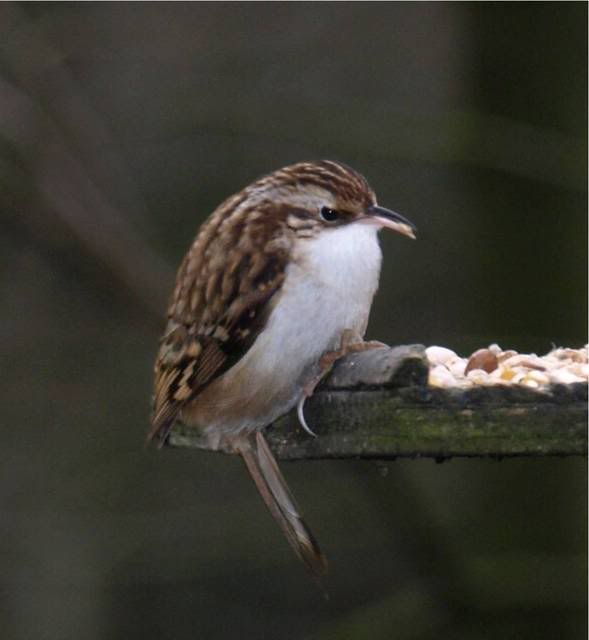
Treecreepers are one of the less common visitors, but this one seemed quite comfortable.
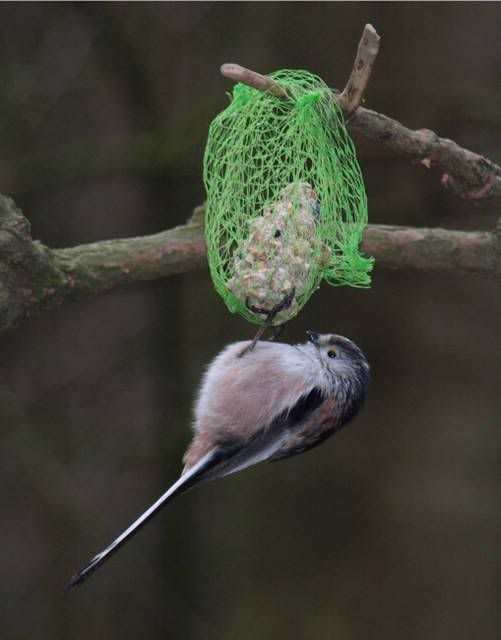
Long-tailed tits travel in flocks and don't often come to bird tables, but there was a small flock of about six or seven hanging about. In winter, they gather together at night in huddled groups to share warmth.
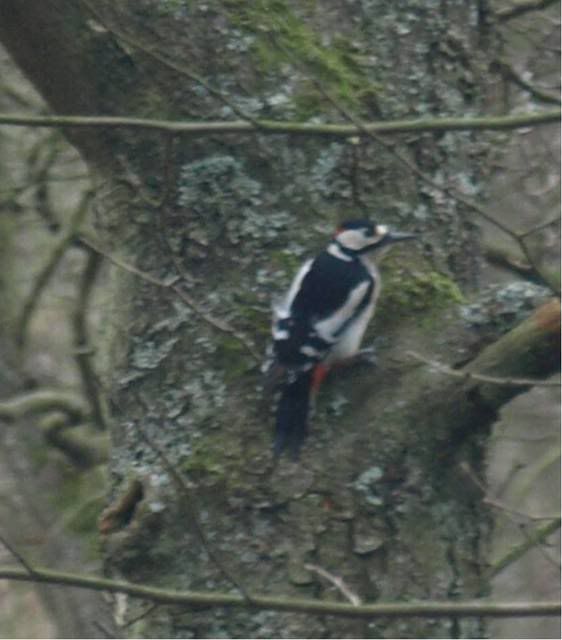
Great spotted woodpecker - if you're lucky, they'll even come down to the bird feeders... but not today. This was as close as this one got.
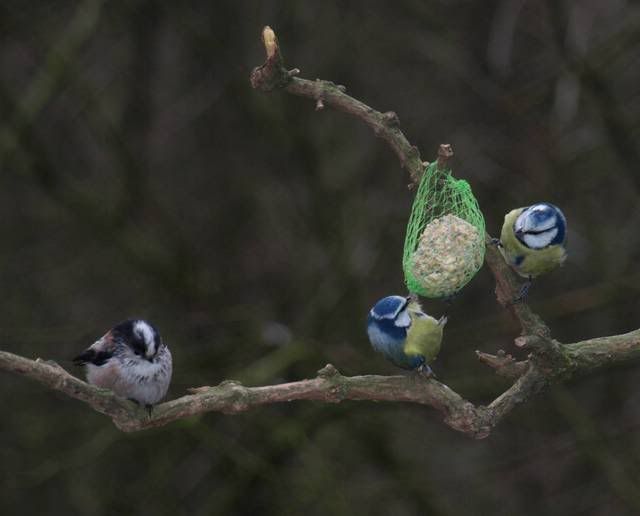
Of course, even with a lot of feeders, there is sometimes a queue.
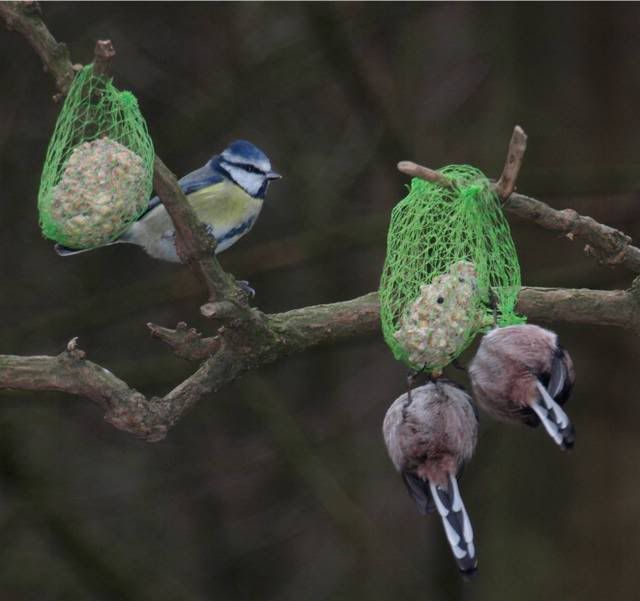
And everybody has to wait their turn.
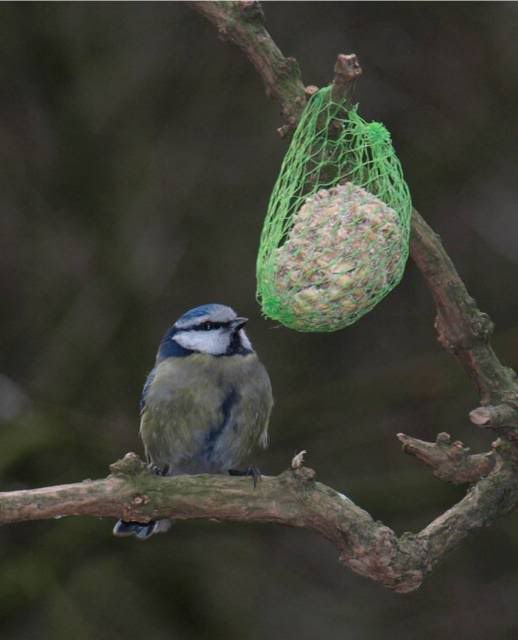
But there's enough for everyone. Blue tits aren't shy about a bit of push and shove.
At this time of year, the light fades too soon, especially at the bottom of the valley, so we headed home after about an hour, partly frozen but happy.
Saturday, 15 July 2006
Humber Mud
To the south and east, there is water.
South is the Humber Estuary, a slow brown ooze; East, the cold grey blue of the North Sea. Where these meet, a long crooked finger of almost-land juts out into the tide, an ever-changing desolation of sand and shingle and mud. Each winter brings a realignment, a chance to breaking away from the mainland, and is followed by the need to rebuild the road that straggles to the end of this impudent finger.
South is the Humber Estuary, a slow brown ooze; East, the cold grey blue of the North Sea. Where these meet, a long crooked finger of almost-land juts out into the tide, an ever-changing desolation of sand and shingle and mud. Each winter brings a realignment, a chance to breaking away from the mainland, and is followed by the need to rebuild the road that straggles to the end of this impudent finger.
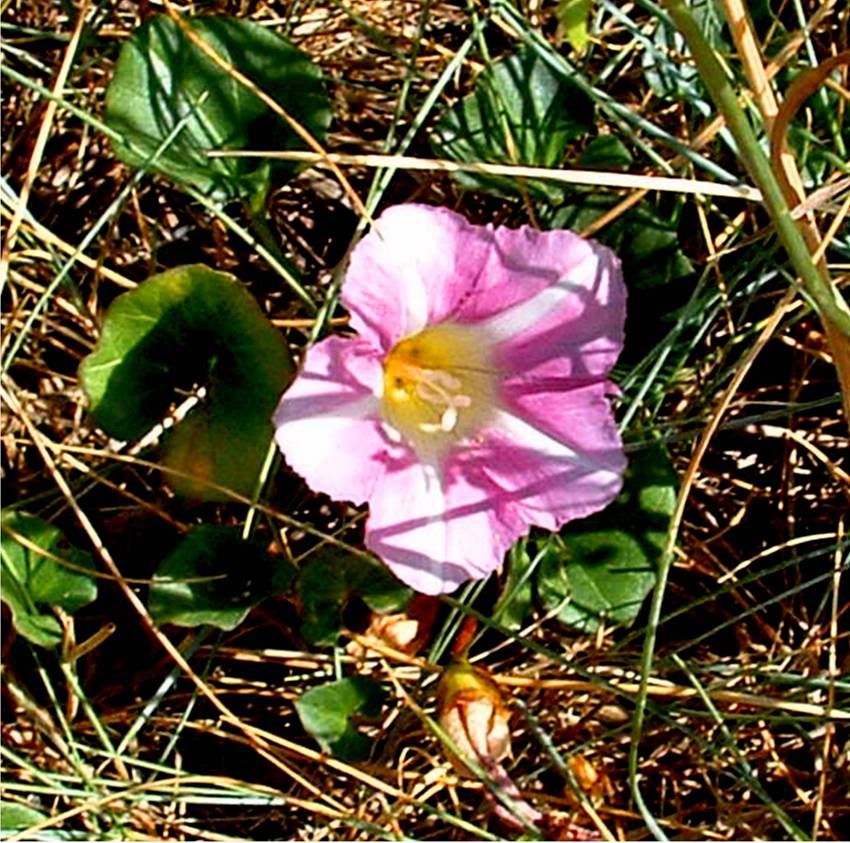
 The road itself is a patchwork of concrete slabs, some inlaid with old railway lines, and odd strips of interlocking blocks which can be dug up and re-laid, at least where there is sufficient land to put them. A single track, with occasional passing places and lay-bys, it connects the isolated lifeboat station and coastguard to the rest of the world. To leave the road surface is to risk grounding, and becoming stuck in deep, soft sand. High banks, covered in bramble, leathery grey-green sea buckthorn and spiny marram grass both protect the roadway and threaten to engulf it. Convolvulus twines through the scrub, turning striped trumpet flowers towards today’s blue sky. It’s not always so welcoming.
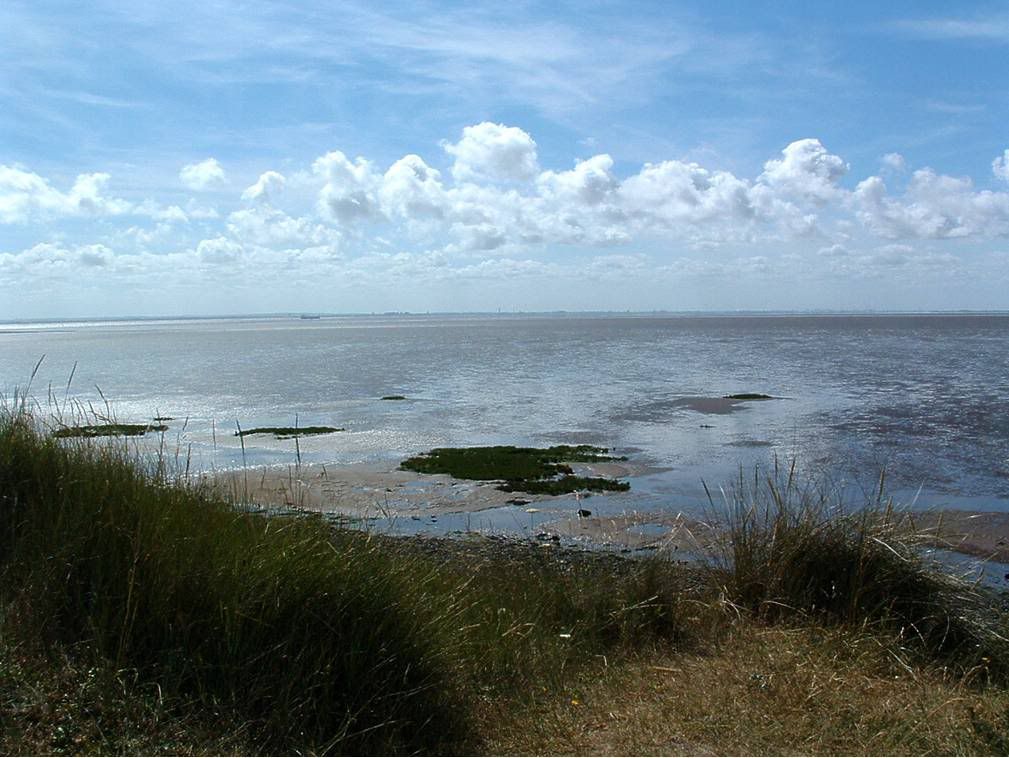
On the seaward side lies the beach, lined with scattered concrete blocks – tank barriers – like children’s toys left out and weathered in a forgotten corner.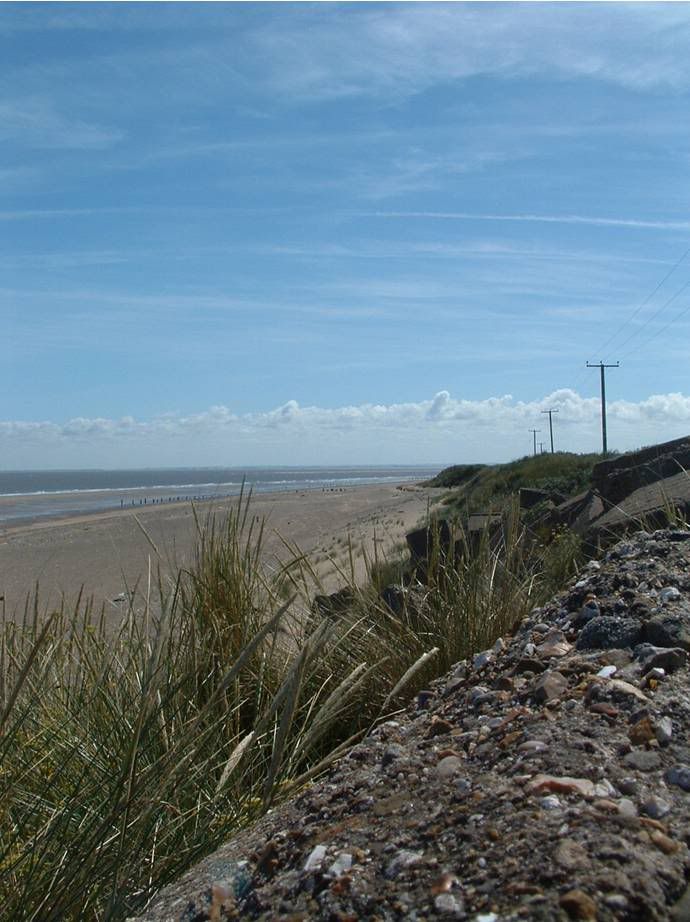
At the end of the land lies the small community of Spurn – houses, for the lifeboat men permanently stationed here; the road is too risky to rely on its being passable during a storm when they might be needed. The old lighthouse and landward tower now are home only to pigeons.
Wending our way back along the track, we come across a patch of sea holly, crisp silver grey-green, flowers tinged with electric blue. A survivor, like Spurn itself.
High Moor
Yorkshire is a big place. Not quite as vast as Texas, I grant you, but big enough to be diverse. My teenage years were spent exploring various parts of it, bird-watching along the muddy Humber estuary, hiking over the high expanses of the Moors; the rolling chalk of the Wolds and the boulder clay of Holderness are always a part of my childhood. Over the last couple of days, we’ve revisited some of these places.
North and west of Mum’s place lie the Wolds – a long ridge of chalk running from the bird-covered cliffs at Flamborough Head to the Humber Bridge, and stretching on south through Lincolnshire. To get almost anywhere outside East Yorkshire, you have to cross these uplands, once medieval sheep pasture and now covered with arable fields, barley and oats parched and ready for harvest under a bleach-blue sky. I wonder vaguely why there are no ancient chalk figures here, as there are on the Downs; perhaps the tribes that inhabited this area held to different gods, perhaps there were fewer regiments to carve out military memorials as they have around Salisbury, perhaps the land proved too fertile to use in this way. I don’t know. The chalk lies very close to the surface; some fields, overploughed, are nothing but pale rubble wastelands. This used to be an open expanse of prairie fields, a result of ‘big is best ‘ in farming, but more enlightened farmers have restored the hedgerows and shelter belts, there are trees again. Roadsides are billows of blue meadow cranesbill and violet scabious; candy-striped convolvulus makes intricate mosaic patches on close cut turf. Vast purple-blue fields of borage, a new crop for the new millennium, punctuate the pale gold of the cereals.
Coming down into the flatlands of the Vale of Pickering, (an old lake bed) we can see the moors rising to the north. A haze of purple-brown, lush green in the folds and gullies, they lack the homeliness of the chalk. From a gold-grey stone that makes for picturesque villages full of coaches and tourists, the land changes; harsh grey drystane dykes trace possession across the hillside, marking inbye from outbye, home farm from common land. Winding narrow roads lead up to the tops, through dales rich with greenery, flourishing oak and ash by the sides of the stony, brown-water becks; bracken, an unwelcome green invader, spreads from mooredge to roadside, and provides concealment for the sudden sheep that materialise in our path. We search for ring ousels amongst the tumbled stone walls, but find nothing but straggly rows of young rooks, dotted along the fence lines, waiting for food, and numerous woodpigeons. Pigeons have an odd, and annoying, ability to look interesting – disguising themselves briefly as falcons, cuckoos, anything – before revealing themselves with a mocking clap of their wings.

The high tops are wide open spaces, ablaze with magenta bell heather, patterned with the dark scars of muirburn. The lurking hummocks of heather-clad shooting butts mirror the rounded forms of the tumuli on the ridges, ancient burial mounds linked by the network of old tracks over the moors. Standing stones and old carved crosses mark the crossing of these ways, tracks used still by long-distance walkers. My feet remember long days and nights, hiking these dusty, peaty, muddy, stony trails.
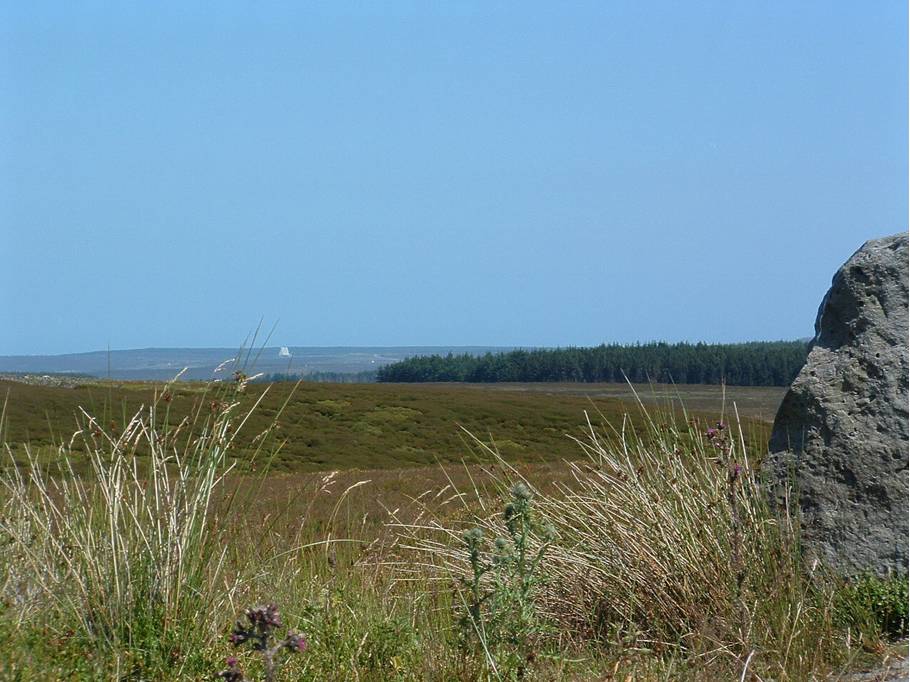
We turn for home. Far away towards the sea, the distant carious tooth of the Fylingdales early warning radar rises above the heather, its truncated pyramid a degree more sinister than its three round forerunners. On Egton High Moor, we stop the car and listen. A contented buzzing of bees, the ever-disgruntled bleating of sheep, the haunting whistle of curlew building to a wild crescendo – does someone have to come out every morning and wind them up? (Sorry, dear, can’t stop, have to go and reset the curlews…)
You can go back.
Subscribe to:
Posts (Atom)
