The new postman doesn’t like my garden. There are too many things in it. He leaves me notes – ‘can you cut back your bushes because of the bees’. He threatens to leave my post at other houses. I feel like saying – you’re a postman, you should be brave – after all, what about dogs? Surely a few bees aren’t a problem? They don’t want to bite your ankles! If I’m home, I see him bending down as he pass the window, preparing to duck under the honeysuckles that run along the wall and over the front door - and incidentally act as a porch, giving shelter when I come home in the rain and am grovelling about in my bag or pocket trying to find my keys. He doesn’t like the honeysuckle 'massive'. It has bees. And moths. And spiders. And various other wildlife. It shelters my snails. And one part of it has big blousy cream and pink flowers in summer, and the other has smaller, delicate white and cream flowers in the early spring, sometimes when the snow is still on the ground, and it defies the worst of the weather.
I don’t think he likes the fuchsia bush by the gate either. From small beginnings it has grown to about two metres in height, and three wide, and at this time of year it’s dripping with red and purple flowers, humming with honey and bumble bees, a clarion call of colour as the sere shades of autumn creep into the rest of the garden. But it doesn’t get in the way. It’s been trimmed back so it doesn’t hang too far over the wall, or get in the way as you come through the gate. There’s a clematis somewhere in the mix as well, a small-flowered blue alpine one, with feathery seed-heads late in the season. This also defies the weather and the salt wind to surprise me with its delicacy and toughness.
The last postman liked my garden – since he’s retired (and taken the job of school crossing guard) he also delivers papers, and we swap gardening thoughts and seeds as the year goes round.
But we all have to get on, and so every so often, I trim the honeysuckle. But not very often!
Showing posts with label flowers. Show all posts
Showing posts with label flowers. Show all posts
Thursday, 28 September 2006

Saturday, 15 July 2006
Humber Mud
To the south and east, there is water.
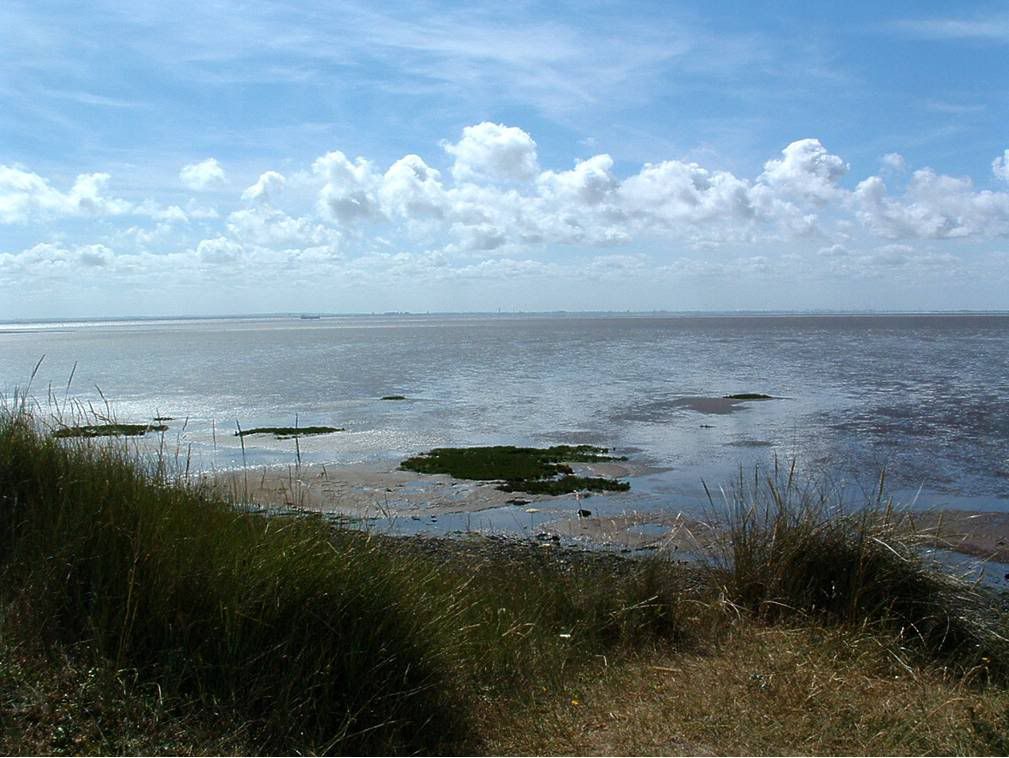
South is the Humber Estuary, a slow brown ooze; East, the cold grey blue of the North Sea. Where these meet, a long crooked finger of almost-land juts out into the tide, an ever-changing desolation of sand and shingle and mud. Each winter brings a realignment, a chance to breaking away from the mainland, and is followed by the need to rebuild the road that straggles to the end of this impudent finger.
South is the Humber Estuary, a slow brown ooze; East, the cold grey blue of the North Sea. Where these meet, a long crooked finger of almost-land juts out into the tide, an ever-changing desolation of sand and shingle and mud. Each winter brings a realignment, a chance to breaking away from the mainland, and is followed by the need to rebuild the road that straggles to the end of this impudent finger.
 The road itself is a patchwork of concrete slabs, some inlaid with old railway lines, and odd strips of interlocking blocks which can be dug up and re-laid, at least where there is sufficient land to put them. A single track, with occasional passing places and lay-bys, it connects the isolated lifeboat station and coastguard to the rest of the world. To leave the road surface is to risk grounding, and becoming stuck in deep, soft sand. High banks, covered in bramble, leathery grey-green sea buckthorn and spiny marram grass both protect the roadway and threaten to engulf it. Convolvulus twines through the scrub, turning striped trumpet flowers towards today’s blue sky. It’s not always so welcoming.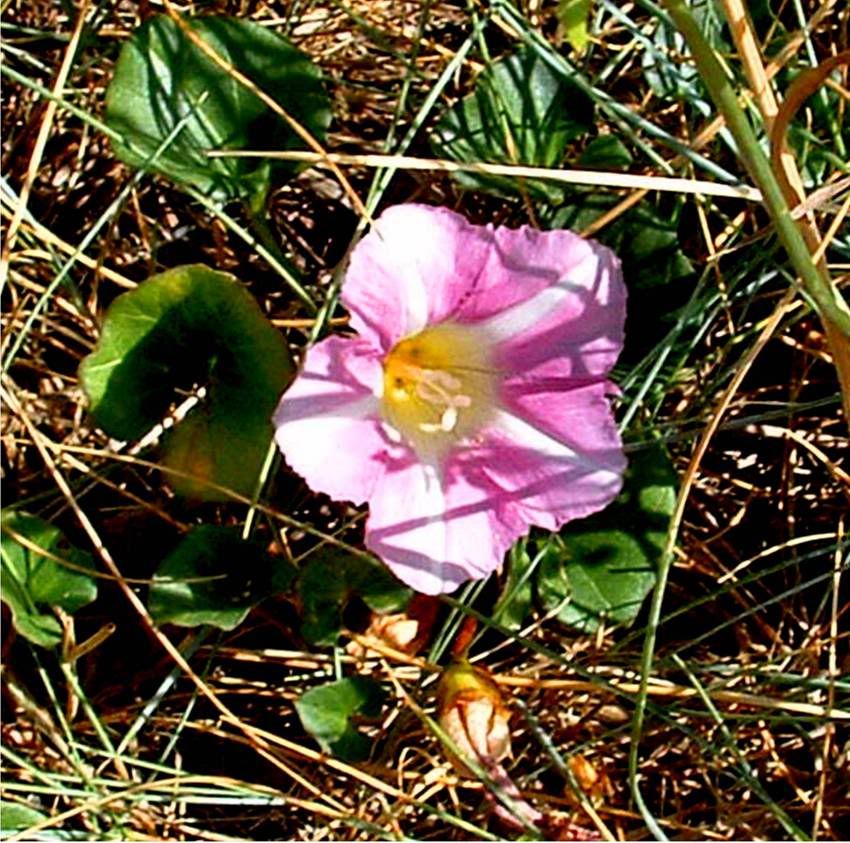
On the seaward side lies the beach, lined with scattered concrete blocks – tank barriers – like children’s toys left out and weathered in a forgotten corner.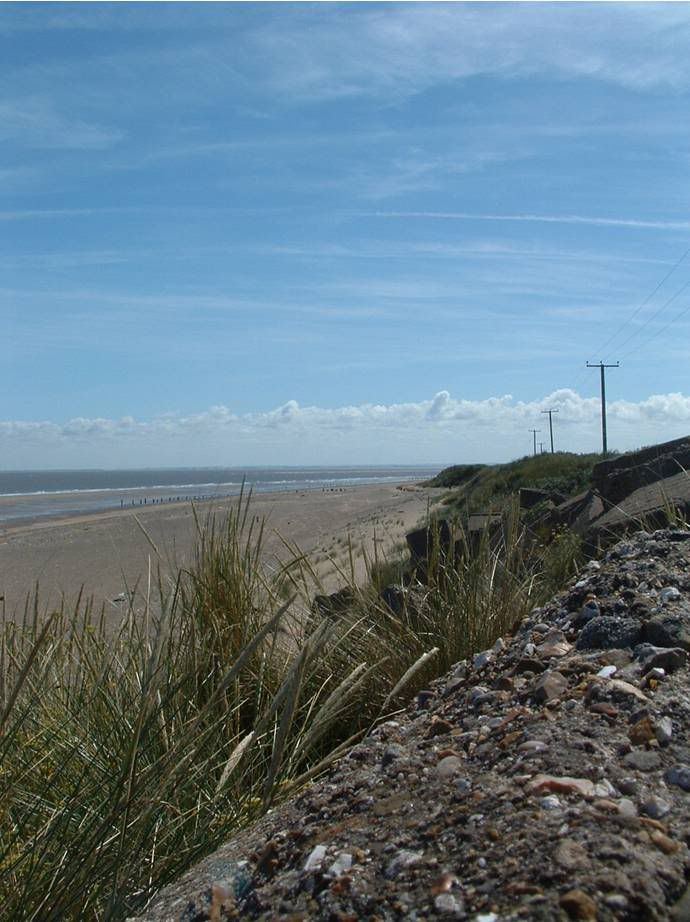
At the end of the land lies the small community of Spurn – houses, for the lifeboat men permanently stationed here; the road is too risky to rely on its being passable during a storm when they might be needed. The old lighthouse and landward tower now are home only to pigeons.
Wending our way back along the track, we come across a patch of sea holly, crisp silver grey-green, flowers tinged with electric blue. A survivor, like Spurn itself.
High Moor
Yorkshire is a big place. Not quite as vast as Texas, I grant you, but big enough to be diverse. My teenage years were spent exploring various parts of it, bird-watching along the muddy Humber estuary, hiking over the high expanses of the Moors; the rolling chalk of the Wolds and the boulder clay of Holderness are always a part of my childhood. Over the last couple of days, we’ve revisited some of these places.
North and west of Mum’s place lie the Wolds – a long ridge of chalk running from the bird-covered cliffs at Flamborough Head to the Humber Bridge, and stretching on south through Lincolnshire. To get almost anywhere outside East Yorkshire, you have to cross these uplands, once medieval sheep pasture and now covered with arable fields, barley and oats parched and ready for harvest under a bleach-blue sky. I wonder vaguely why there are no ancient chalk figures here, as there are on the Downs; perhaps the tribes that inhabited this area held to different gods, perhaps there were fewer regiments to carve out military memorials as they have around Salisbury, perhaps the land proved too fertile to use in this way. I don’t know. The chalk lies very close to the surface; some fields, overploughed, are nothing but pale rubble wastelands. This used to be an open expanse of prairie fields, a result of ‘big is best ‘ in farming, but more enlightened farmers have restored the hedgerows and shelter belts, there are trees again. Roadsides are billows of blue meadow cranesbill and violet scabious; candy-striped convolvulus makes intricate mosaic patches on close cut turf. Vast purple-blue fields of borage, a new crop for the new millennium, punctuate the pale gold of the cereals.
Coming down into the flatlands of the Vale of Pickering, (an old lake bed) we can see the moors rising to the north. A haze of purple-brown, lush green in the folds and gullies, they lack the homeliness of the chalk. From a gold-grey stone that makes for picturesque villages full of coaches and tourists, the land changes; harsh grey drystane dykes trace possession across the hillside, marking inbye from outbye, home farm from common land. Winding narrow roads lead up to the tops, through dales rich with greenery, flourishing oak and ash by the sides of the stony, brown-water becks; bracken, an unwelcome green invader, spreads from mooredge to roadside, and provides concealment for the sudden sheep that materialise in our path. We search for ring ousels amongst the tumbled stone walls, but find nothing but straggly rows of young rooks, dotted along the fence lines, waiting for food, and numerous woodpigeons. Pigeons have an odd, and annoying, ability to look interesting – disguising themselves briefly as falcons, cuckoos, anything – before revealing themselves with a mocking clap of their wings.

North and west of Mum’s place lie the Wolds – a long ridge of chalk running from the bird-covered cliffs at Flamborough Head to the Humber Bridge, and stretching on south through Lincolnshire. To get almost anywhere outside East Yorkshire, you have to cross these uplands, once medieval sheep pasture and now covered with arable fields, barley and oats parched and ready for harvest under a bleach-blue sky. I wonder vaguely why there are no ancient chalk figures here, as there are on the Downs; perhaps the tribes that inhabited this area held to different gods, perhaps there were fewer regiments to carve out military memorials as they have around Salisbury, perhaps the land proved too fertile to use in this way. I don’t know. The chalk lies very close to the surface; some fields, overploughed, are nothing but pale rubble wastelands. This used to be an open expanse of prairie fields, a result of ‘big is best ‘ in farming, but more enlightened farmers have restored the hedgerows and shelter belts, there are trees again. Roadsides are billows of blue meadow cranesbill and violet scabious; candy-striped convolvulus makes intricate mosaic patches on close cut turf. Vast purple-blue fields of borage, a new crop for the new millennium, punctuate the pale gold of the cereals.
Coming down into the flatlands of the Vale of Pickering, (an old lake bed) we can see the moors rising to the north. A haze of purple-brown, lush green in the folds and gullies, they lack the homeliness of the chalk. From a gold-grey stone that makes for picturesque villages full of coaches and tourists, the land changes; harsh grey drystane dykes trace possession across the hillside, marking inbye from outbye, home farm from common land. Winding narrow roads lead up to the tops, through dales rich with greenery, flourishing oak and ash by the sides of the stony, brown-water becks; bracken, an unwelcome green invader, spreads from mooredge to roadside, and provides concealment for the sudden sheep that materialise in our path. We search for ring ousels amongst the tumbled stone walls, but find nothing but straggly rows of young rooks, dotted along the fence lines, waiting for food, and numerous woodpigeons. Pigeons have an odd, and annoying, ability to look interesting – disguising themselves briefly as falcons, cuckoos, anything – before revealing themselves with a mocking clap of their wings.

The high tops are wide open spaces, ablaze with magenta bell heather, patterned with the dark scars of muirburn. The lurking hummocks of heather-clad shooting butts mirror the rounded forms of the tumuli on the ridges, ancient burial mounds linked by the network of old tracks over the moors. Standing stones and old carved crosses mark the crossing of these ways, tracks used still by long-distance walkers. My feet remember long days and nights, hiking these dusty, peaty, muddy, stony trails.
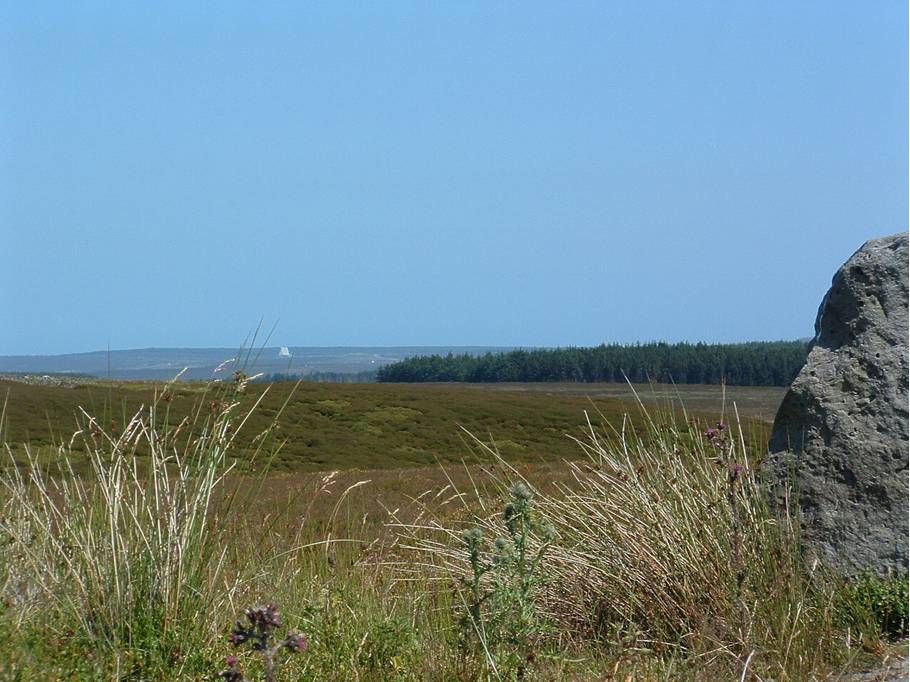
We turn for home. Far away towards the sea, the distant carious tooth of the Fylingdales early warning radar rises above the heather, its truncated pyramid a degree more sinister than its three round forerunners. On Egton High Moor, we stop the car and listen. A contented buzzing of bees, the ever-disgruntled bleating of sheep, the haunting whistle of curlew building to a wild crescendo – does someone have to come out every morning and wind them up? (Sorry, dear, can’t stop, have to go and reset the curlews…)
You can go back.
Sunday, 2 July 2006
Sneeze or Freeze...
The colours are changing again - yellow hangs on tenaciously in the form of fields thick with buttercups, and in the vast, almost indefineable range of dandeliony-things (OK, I know I'm supposed to know what they all are but a summer idleness creeps in - hawkweeds, cat's ears, hawksbits, coltfoot, and dandelions are just some of the range to select from), the white is there in the form of ox-eye daisies, but is slowly changing; the 'palest-maiden's-blush-to-hot-flush' pinks of dog roses, tall spikes of foxgloves in every shade from white to carmine, red campion, vibrant scarlet of field poppies, the red haze of grasses... it's glorious, but somewhere in it all is a lurking hay-fever trigger.
Driving whilst sneezing is a hazardous occupation. And driving for over 400 miles whilst sneezing is not conducive to road safety. Fortunately, the car has air conditioning, which comes complete with - fanfare - pollen filters! Which saved the day, but revealed a slight downside - you need to keep it switched on. Which is all very well when the sun is shining and its 20 degrees or so, but when it starts to rain and the temperature drops, being in the car becomes rather like stepping inside one of those big freezers in the supermarket. There is a likelihood of frostbite. But what is the alternative?
So this summer, if you see someone, on the hottest of days, driving around with the windows closed, wearing woolly gloves, hat and scarf... it could be me, avoiding hayfever.
Driving whilst sneezing is a hazardous occupation. And driving for over 400 miles whilst sneezing is not conducive to road safety. Fortunately, the car has air conditioning, which comes complete with - fanfare - pollen filters! Which saved the day, but revealed a slight downside - you need to keep it switched on. Which is all very well when the sun is shining and its 20 degrees or so, but when it starts to rain and the temperature drops, being in the car becomes rather like stepping inside one of those big freezers in the supermarket. There is a likelihood of frostbite. But what is the alternative?
So this summer, if you see someone, on the hottest of days, driving around with the windows closed, wearing woolly gloves, hat and scarf... it could be me, avoiding hayfever.
Tuesday, 20 June 2006
No safety in numbers
So I blearily stumbled out of my door this morning to take out the trash and thought - where the heck's the bowl of flowers? Some b*stard's nicked some of my plant pots!
Now I know my garden's overgrown - (but it's intentionally like that, the owner squeaked) - but nicking my plant pots is a bit much! By the look of it, there's three gone. It's difficult to tell, as I have a lot of them - it's a small garden with a chunk of concrete -hence pots on the hardstanding - but it looks like the ones that are currently out (like - flowering with a vengeance, looking great, cost a lot!) are among the vanished. Rhodohypoxis, I mourn thee - ten years I've had these, and they've dutifully flowered every spring/summer, they have been the subject of mystery - why did I plant half red bulbs, half white, and they all end up white? - they have cheered me up every year. Gone, now, probably to some a**hole's stall at a car-boot sale. It's not as if it would be awfully easy - walking down the road with a pot of plants would be a bit obvious, let alone several - has to be a car heist. And they'd have to be looking closely - the garden ain't that self-evident.
What, or who, can profit in plant-pot heists?
Now I know my garden's overgrown - (but it's intentionally like that, the owner squeaked) - but nicking my plant pots is a bit much! By the look of it, there's three gone. It's difficult to tell, as I have a lot of them - it's a small garden with a chunk of concrete -hence pots on the hardstanding - but it looks like the ones that are currently out (like - flowering with a vengeance, looking great, cost a lot!) are among the vanished. Rhodohypoxis, I mourn thee - ten years I've had these, and they've dutifully flowered every spring/summer, they have been the subject of mystery - why did I plant half red bulbs, half white, and they all end up white? - they have cheered me up every year. Gone, now, probably to some a**hole's stall at a car-boot sale. It's not as if it would be awfully easy - walking down the road with a pot of plants would be a bit obvious, let alone several - has to be a car heist. And they'd have to be looking closely - the garden ain't that self-evident.
What, or who, can profit in plant-pot heists?
Monday, 19 June 2006
How does it know?
Barbecue. It rains.
We have a secret weapon -
Mike's polytunnel!
Which kinda sums up Sunday. The rest of the week has been lovely, (apart from a damp Saturday, but as that's 'domestics day' it made little difference.
Naturally, for the barbecue on Sunday, the weather decided to be as helpful as possible, and proceeded to chuck it down, grey and overcast, for most of the day.
However - friend Mike had a cunning plan to deal with the problem - he is a resourceful lad - so set up the barbecue in his big polytunnel (he grows organic veg - for our Antipodean readers, he's known as VeggieMike) and we sat amongst the courgettes, warm and dry - if a little kippered from the smoke.
Driving home at about 9.30 last night (still broad daylight - you gotta love Scottish 'summer' evenings!) noticed a hedgerow consisting almost exclusively of laburnum - about 500 metres just dripping with golden chandeliers. It's definitely a yellow and white time of year. Flower colours seem to come in waves - first the white of snowdrops, then yellow primroses, then the blackthorn kicks in, white again. Daffodils are followed by hawthorn, and gorse, broom and laburnum are hard on the tail of that. Occasional punctuation by bluebells and red campion...... and this morning I noticed that the tiny dune pansies are showing along the roadside, blue-violet and palest yellow.
I still haven't put batteries in the camera....
We have a secret weapon -
Mike's polytunnel!
Which kinda sums up Sunday. The rest of the week has been lovely, (apart from a damp Saturday, but as that's 'domestics day' it made little difference.
Naturally, for the barbecue on Sunday, the weather decided to be as helpful as possible, and proceeded to chuck it down, grey and overcast, for most of the day.
However - friend Mike had a cunning plan to deal with the problem - he is a resourceful lad - so set up the barbecue in his big polytunnel (he grows organic veg - for our Antipodean readers, he's known as VeggieMike) and we sat amongst the courgettes, warm and dry - if a little kippered from the smoke.
Driving home at about 9.30 last night (still broad daylight - you gotta love Scottish 'summer' evenings!) noticed a hedgerow consisting almost exclusively of laburnum - about 500 metres just dripping with golden chandeliers. It's definitely a yellow and white time of year. Flower colours seem to come in waves - first the white of snowdrops, then yellow primroses, then the blackthorn kicks in, white again. Daffodils are followed by hawthorn, and gorse, broom and laburnum are hard on the tail of that. Occasional punctuation by bluebells and red campion...... and this morning I noticed that the tiny dune pansies are showing along the roadside, blue-violet and palest yellow.
I still haven't put batteries in the camera....
Thursday, 15 June 2006
Surfing the Season
Drove inland today. Felt more like being back on the beach - great waves of greenery crested with white foam breaking over the road, tumbling down in billows of creamy blossom to break just above the car, smaller waves of cow parsley in foamy clouds on the roadsides, yellow Gondor-beacons of gorse bushes and broom blazing warning - summer's almost here!
One of these days I'll get the camera out.
OK - consider yourselves warned - poems happen here. I started writing 'sort-of-haiku' a while back; my Mum didn't quite catch what I'd said and asked 'OK so what are these hoboes?'
It stuck.
Peripatetic poems.
Bum un-verse.
They'll happen, given time.
Be afraid. Be very afaid.
One of these days I'll get the camera out.
OK - consider yourselves warned - poems happen here. I started writing 'sort-of-haiku' a while back; my Mum didn't quite catch what I'd said and asked 'OK so what are these hoboes?'
It stuck.
Peripatetic poems.
Bum un-verse.
They'll happen, given time.
Be afraid. Be very afaid.
Subscribe to:
Posts (Atom)
