Showing posts with label birds. Show all posts

Saturday, 7 May 2011

Go West!

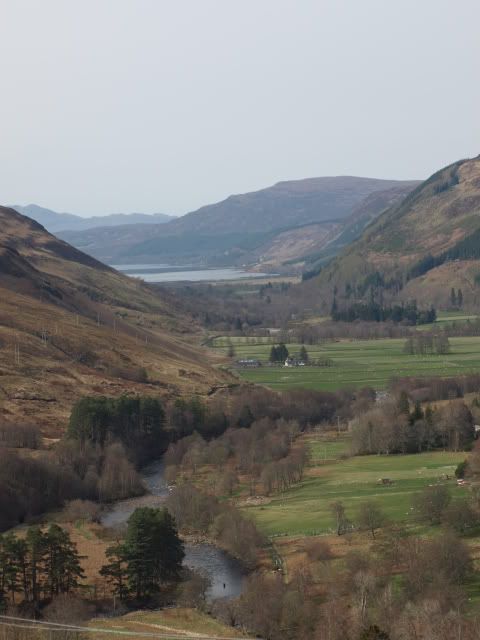
A year or two ago, I made a trip to the far North, ending up at Ledmore Junction, where the fading light forced me to turn for home. I said at the time that I wanted to continue the trip down towards Ullapool, and in mid-April this year, while Mum was staying, we decided it was time to do just that. So, packing a few sandwiches and cereal bars, we headed west.

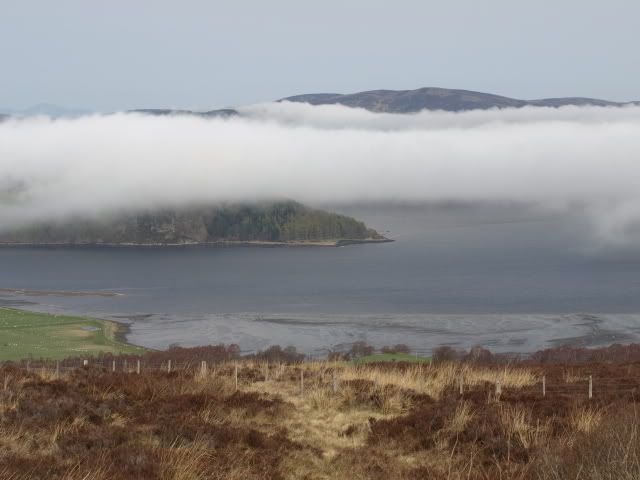
The weather along the Moray Firth was beautiful, until we got to Nairn, where an unexpected haar rolled in. Normally the fogbanks stay offshore (or sit over my house) but some twist of the weather meant that they followed course of the inner firth, and it wasn't until we had gone quite a way inland that the sun broke through again.

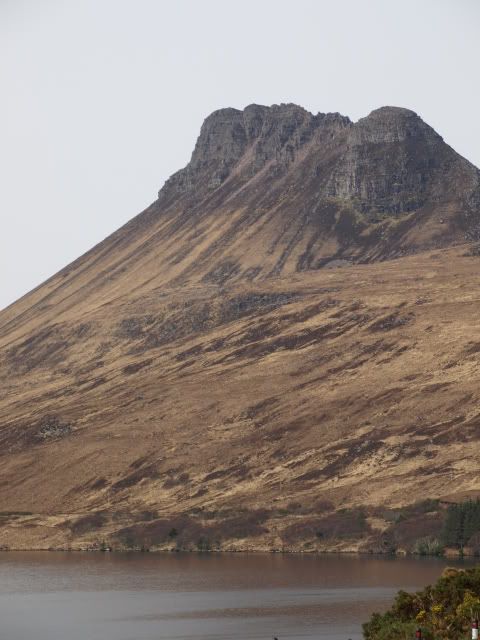
It took around four hours to reach Ledmore again, and the great lumps of Assynt rose before us. Last trip, I posted a picture of Suilven in the rear view mirror - this is the way it should look!

The road south runs through the Geopark - the whole area is fascinating from a geological point of  view - and we couldn't resist a diversion through the heart of it, past Stac Pollaidh towards Achiltibuie and the Summer Isles.
The road is one of the usual single-track-with-passing-places, and there are several small car parks for hill walkers, all full. Small lochs lie in the hollows between the hills, and we were delighted to get a great sighting of a black throated diver in full breeding plumage - not close enough for a decent photograph, unfortunately. Further on, we pause beside Loch Raa, where a flurry in the water turns out to be two otters! Again, they were not photographically obliging...

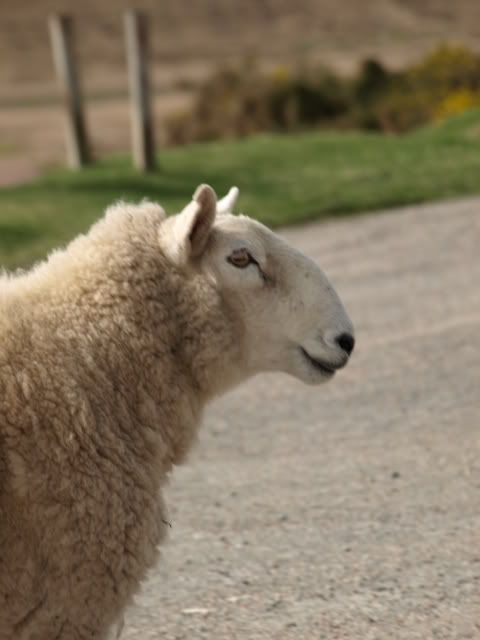
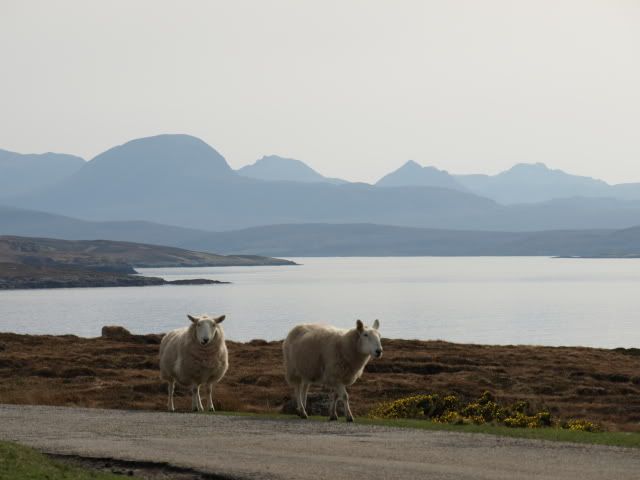
The sheep, on the other hand, were quite content to pose.

Not far from Achiltibuie, a small ferry takes visitors across to the Summer Isles. (and yes, they do exist outside of the 'Wicker Man' - in fact they have nothing to do with it at all.)


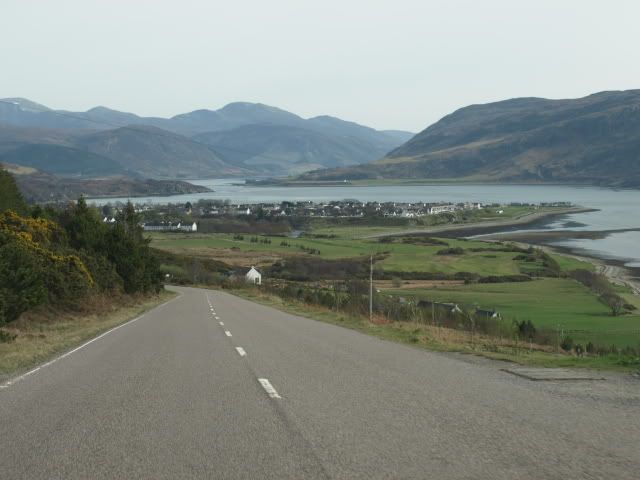
Turning back, we look again for the otters, but they have gone, as has the diver. We rejoin the main road and head for Ullapool, on the shore of Loch Broom.
It's an active fishing port, and full of tourists so we don't linger, heading instead for Gruinard Bay. Gruinard Island is more notorious for being the site of anthrax testing in the second world War, and was only decontaminated in 1990. On a previous trip, we saw a white-tailed sea eagle on the island; today the bay held more divers - red-throated and Great Northern - which are hard to follow as they do exactly as their name suggests - they dive, and usually surface a long way from where they vanish!

Time to go. Past the naval refuelling station at Loch Ewe, the gardens of Inverewe, to Poolewe at the end of Loch Maree.

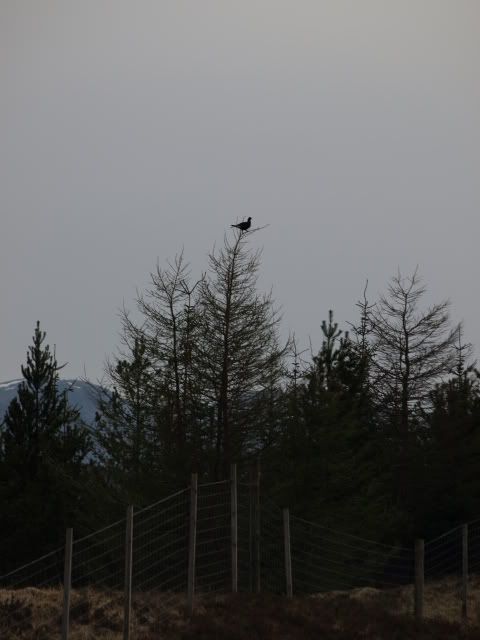
We follow the lochside, towards Achnasheen, and come to a sudden halt in a convenient layby. 'There's a black grouse in that tree!' 'What - good heavens, so there is!'
And there was.

Next time, it's Torridon and Applecross, and the third highest (and most dramatic) road in Scotland...unless we go to Skye first! we shall see...

Sunday, 27 February 2011

Geese leaving Strathbeg

Turning Seasons

Getting up at an unearthly hour to count the geese every month can sometimes be a bit of a trial, but there are some things that make it worthwhile - the song of a skylark, giving it laldy somewhere overhead in the darkness before dawn; groups of roe deer grazing along the field margins, coming within twenty yards before catching sight or smell of the car, and bolting away into the sunrise, or leaping over the fences with astonishing grace; a flight of whooper swans skimming low over the wood and straight over the car, 'whoong-ing' to each other as they pass overhead. And of course, the geese, in their thousands, rising from the loch and the Low Ground where they have been roosting and feeding to head out into the dawn in search of more food, building strength for the new breeding season.

And the sunrise... each early morning this year, the sun rises a little bit further north. In mid-January, it rose in a scarlet and fuchsia glory behind the Rookery Wood. This morning, it was a full hands-width further round, beyond the airfield; pink filigree lighting the clouds before the gold-on-blue brilliance made using my binoculars a distinctly unsafe business. It marks the changing seasons as much as the snowdrops that flourish in the damp woodlands, or the sudden appearance of lambs, which pop up as if hatching from the turnips their mothers are feeding on. (Or are they helping them to hatch? My passing aliens might suspect so.) Spring is finally showing signs of returning.

And one day I'll figure out how to stick a video into a blog post without have to do it separately!

Saturday, 30 October 2010

Notes from the Lochside

The far side drifts in and out, grey veils of misty rain swirling across the still water. The robin darts onto the deck, grabs a piece of something from the birdfood scattered on the railings and vanishes again, only to return in a flurry of wings to send an inquisitive chaffinch packing. Falling leaves look like small birds flying to the ground; as the rain grows heavier, the drops hit the remaining foliage, drawing the eye – was that another bird?
No, just a bouncing leaf.
A bedraggled great tit, feathers askew, lands on the bird table and tucks into the birdcake, caution and hunger in equal measure as the bird looks over its shoulder for predators then returns to its feast. More arrive, great tits, blue tits and the occasional coal tit. For a while it looks like a game of feathery billiards, each bird that lands on a feeder sending the previous incumbent bouncing off in another direction, to the table, or the hanging coconut shell, or the debris scattered below on the decking, none willing to share their position. Gradually they settle down and seem to become more tolerant, and even the robin slacks off his sentry duty.
A flash of yellow catches my eye and makes me look twice at the bird that's just arrived. Smaller than the chaffiches, with a deeper notch in the tail - female siskin. Another joins her, and finally a male arrives, smart in black, green and yellow.
The loch slowly reappears, punctuated by a small group of cormorants, their flight low and purposeful, heading southwest. Mallards squabble at the water's edge. The far side emerges as the rain eases off, a tapestry of green and brown and russet. The trees are beginning to turn colour; as if someone is tweaking the hue and intensity settings.
For a brief half-hour, the skies clear, and the birds, strange to relate, vanish.
Then the drizzle returns, and the far side starts to disappear once more.

Friday, 9 January 2009

Forge Valley

Well, you can't spend the entire holiday indoors knitting, can you?

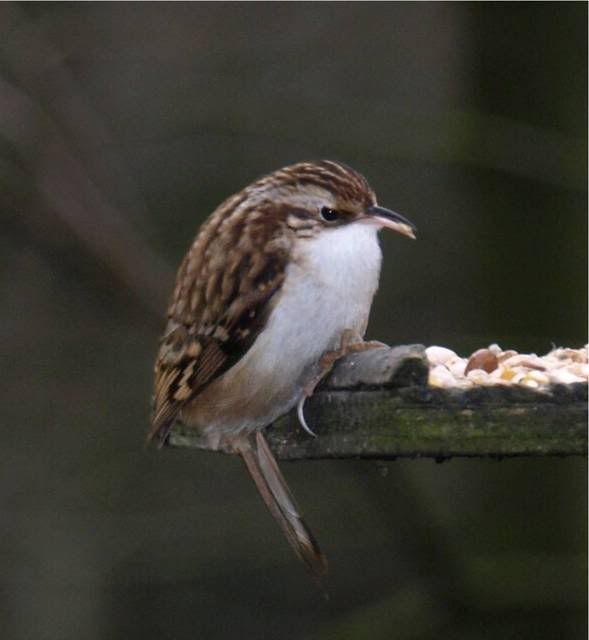
So we took ourselves off to a regular haunt, to see what the birds were doing. Forge Valley is inland from Scarborough, on the south side of the North York Moors. The valley is probably glacial, and the River Derwent starts here somewhere. It's closely wooded, steep-sided, and has several stopping places, one of which is specifically for birdwatchers - there are lots of bird tables and hanging feeders, and after Xmas these are piled high with food for the local birds - and they are not shy about coming to take advantage of it. If you sit in the car, reasonably quietly, they ignore you; on occasion we have put food on the bonnet and had the birds queuing up on the aerial to feed! There is great variety, blackbirds, pheasants, woodpigeons, and loads of 'small stuff'... like these...


Treecreepers are one of the less common visitors, but this one seemed quite comfortable.


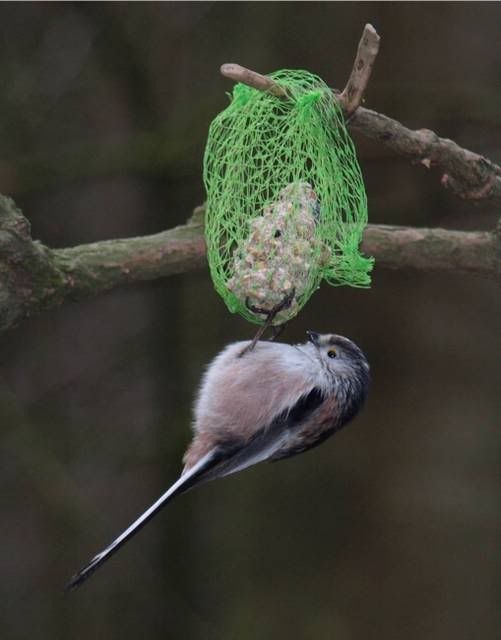
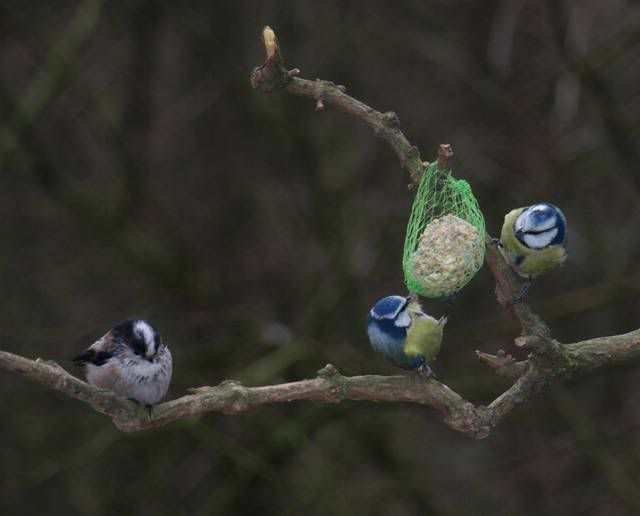
Long-tailed tits travel in flocks and don't often come to bird tables, but there was a small flock of about six or seven hanging about. In winter, they gather together at night in huddled groups to share warmth.


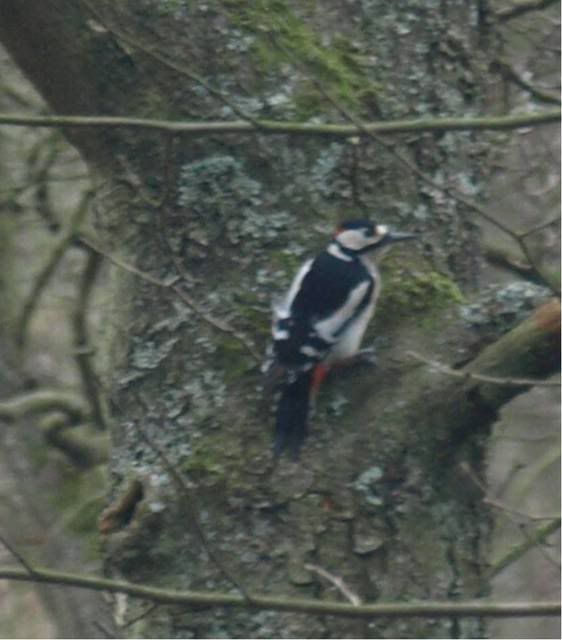
Great spotted woodpecker - if you're lucky, they'll even come down to the bird feeders... but not today. This was as close as this one got.


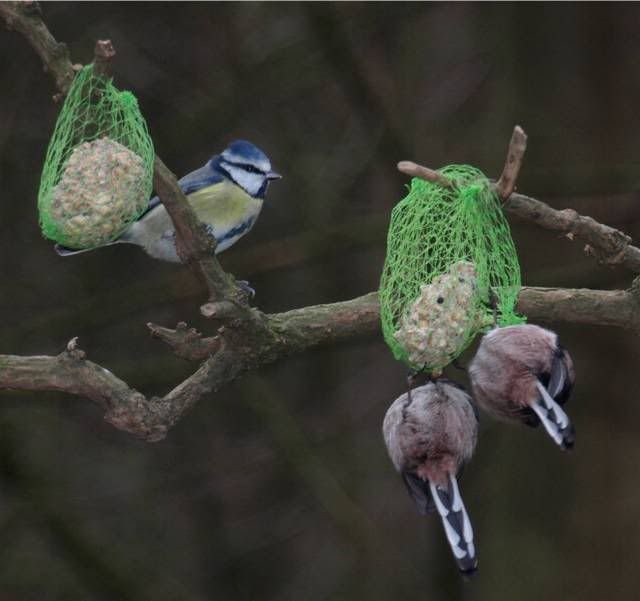
Of course, even with a lot of feeders, there is sometimes a queue.


And everybody has to wait their turn.


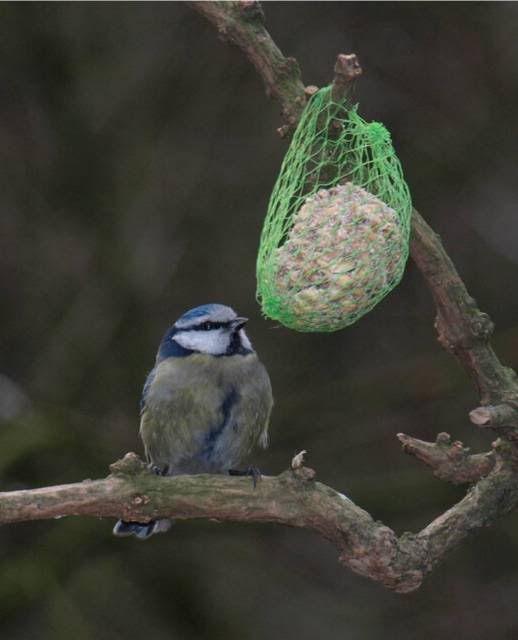
But there's enough for everyone. Blue tits aren't shy about a bit of push and shove.

At this time of year, the light fades too soon, especially at the bottom of the valley, so we headed home after about an hour, partly frozen but happy.

Saturday, 22 November 2008

Loch & Awe

Autumn, changing colours and the hint of oncoming winter.... what do you do? Sounds like a good time to take a break, relax and go on holiday, which is what Mum and I did in October. Some years ago we went to a Forestry Commission site at Loch Awe, which got sold off - this year we found that some of the cabins were again for rent - (have a look here) - so we decided to go back, and so glad we did!

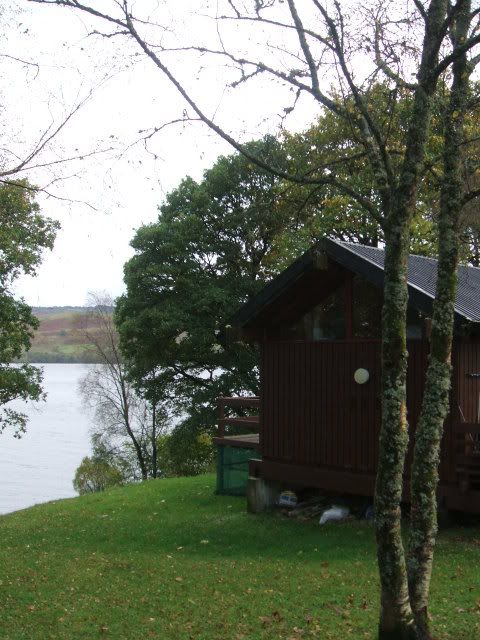
This is the cabin, overlooking the loch....


It's compact, cosy, very reasonably priced, and fully heated!
We didn't expect the weather to be good - and were not disappointed - it chucked it down on a regular basis - when we woke up, the loch was usually calm and still, the wind picked up during the day becoming quite fierce by nightfall. Nevertheless, one morning I woke to the sound of thunder so loud that I thought it was blasting at a nearby quarry - the blast reverberated through me as I lay in my bunk, and the sound of the rain on the roof was deafening! But the cabin was snug, and we had a great deal of pleasure just watching the rain, and the loch rising...at least a foot during the week...

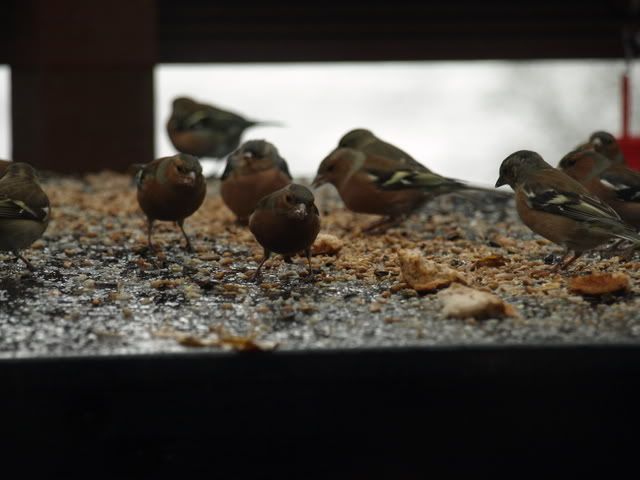
We put out bird-feeders, as we'd done in the past, (and had on one visit attracted a pine marten)and were soon discovered by the locals - I don't think I've ever seen so many coal tits, chaffinches, great tits, and blue tits - who soon proceeded to eat us out of house and home....


There were also siskins, a wren, and a robin who appeared to be the only vegetarian robin I've ever encountered - we got in some mealworms for him which were studiously ignored in favour of breadcrumbs..

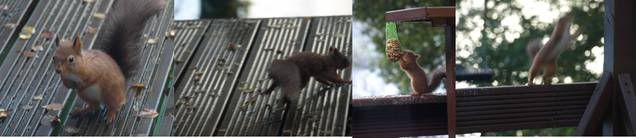
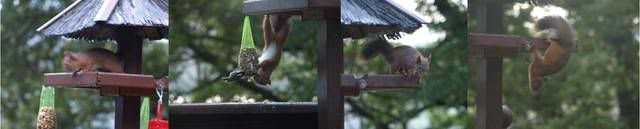
The most striking visitor to the feeders was a red squirrel, who appeared on the second day, and then came back every day - several times a day on occasion. The peanuts were the main focus of his attention, but he paid visits to the sunflower seeds, and checked out the whole deck in case he'd missed something.


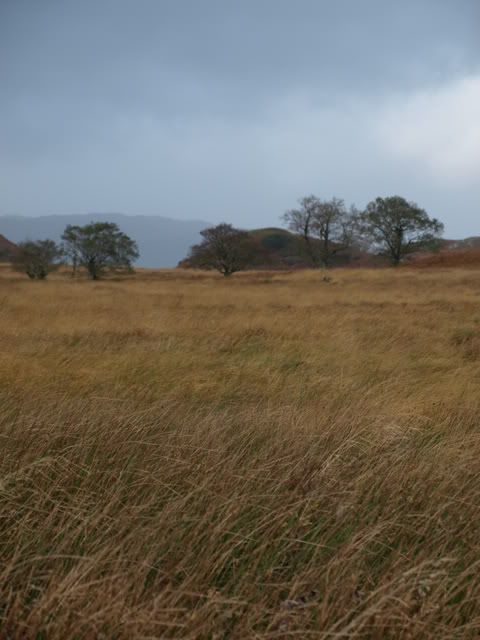
The weather meant we stayed in the cabin quite a lot - which was excellent, as it meant we got to see all the visitors - but we still managed to get out and about on a few occasions - through Kilmartin Glen with its standing stones and burial mounds (the ancient heart of the kingdom of Dalriada) down to Crinan - across the Moine Mhor (Great Bog) Nature Reserve


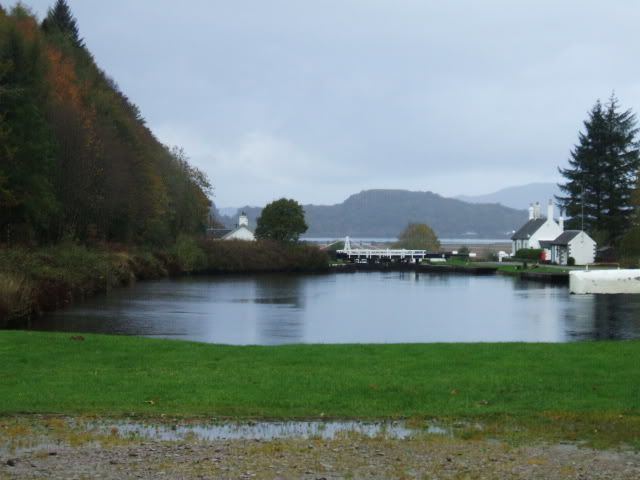
...and the Canal itself, with the huge locks that connect the inner loch to the sea and formed the basis for much of the trade in the early part of the 20th century - the heart of 'Para Handy' country.


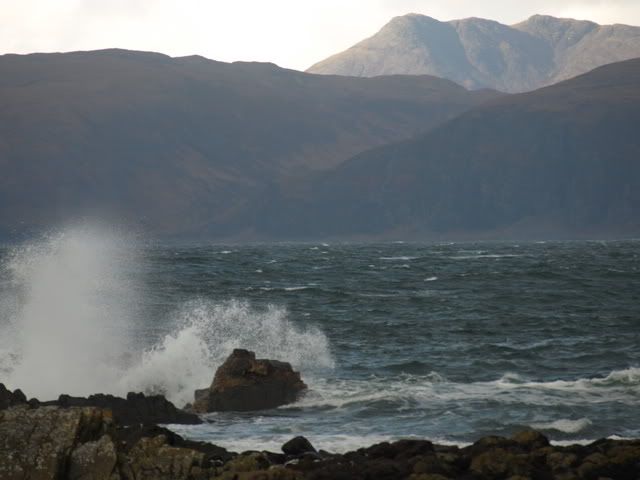
We went down through the islands to Seil and Easdale (and managed to flatten the car battery by leaving the lights on whilst having lunch!)where the wind was whipping the sea up.


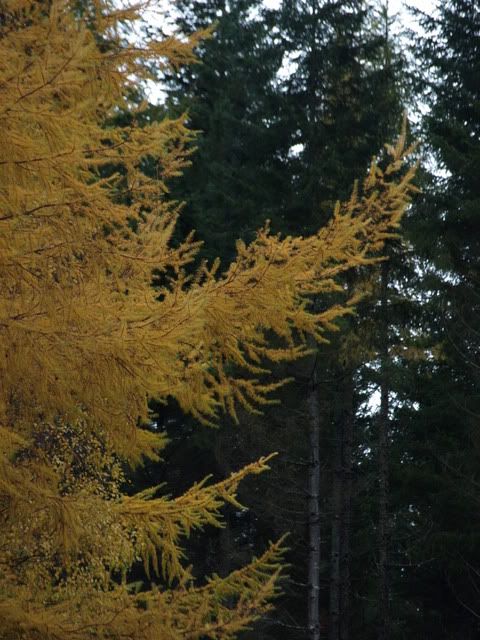
We stayed at the cabin for a week - utterly relaxing, quite enchanting, and rather soggy! Wet, mossy forests, sudden storms, and the glorious reds, golds and bronzes of autumn bracken and leaves. We came home through some of the wettest weather - floods in Oban and the higher end of Speyside round Laggan, where the autumn colours were still developing.


The trees were thick with lichen - a good indicator of clean air, and strange in its own right...


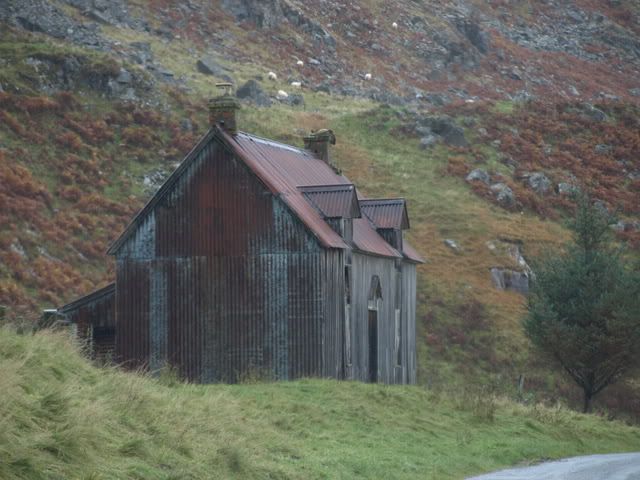
We side-tracked towards the headwaters of the Spey (defeated by floods) but paused at this old house, before finally heading for home, and fish and chips.


Loch Awe....Wet it may have been, but I'd utterly recommend it as an out-of-the way spot for relaxation!

Saturday, 26 January 2008

Waters of Philorth

First public even of the year, and a chilly afternoon on the estuary. We’re doing a joint bird-watching thing, between the Council Rangers, RSPB and my own organisation, looking at what is on the estuary and beach to the west of my village. I guess it’s pretty good, having two nature reserves nearby – this is the ‘lesser’ one, the Local Nature Reserve(LNR). LNRs are a way the local Council can protect anything interesting, and help prevent the constant degradation of habitat that seems to be a feature of our world.

So we set out in a chill wind, enough to bring tears to the eyes. I (being of limited mobility) took up post on the river, to check on whatever turned up on the inland section, while the rest headed over the dunes to the beach and the mouth of the river, braving the wind-whipped sand and sea spray.

It’s a place where people come to walk their dogs, and they were present in abundance – from small jovial terriers to aloof lurchers, juvenile retrievers that growled at me as a ‘new & therefore weird’ person, springer spaniels that leapt into the river with a joyful bark and a constantly wagging tail, senior sheepdogs that try to round everyone else up – the prevalent smell in the cars heading homeward must be ‘wet dog’…

Some of the owners are responsible, cleaning up the mess after their pooches dump last night’s dinner. But many don’t seem to feel it’s a problem – you would think that, coming here day after day, they would notice the build up of dog crap around the site, but they seem to have selective vision. Indeed, a local councillor has been reported as saying ‘Well, the bin isn’t near where my dog does its business.’ Good example, guys.

So the place is pretty much a ‘watch where you walk’ endeavour, and even the responsible owners aren’t entirely blameless – I watched a guy with three dogs on leads and three running loose… the ones on leads he cleaned up after…the others had done their thing before he got to where I was standing, and of course he didn’t know they had dumped by then…I do wish people would be aware of what their animals were doing when not under their immediate control, as this would prevent a lot of confrontation between visitors and managers of sites…

Sigh. Enough of crap. Literally. Just clear it up, that’s my view.

There weren’t too many birds around – gulls, crows, jackdaws – last year, we did this walk a month later and there were quite a lot of waders – but this could have been a factor of the tide.

Today was the day after a high spring tide, and coupled with a lot of recent rain, the estuary was pretty full. You expect the tide to fill, hit the top – slack – and then retreat, but it seems this isn’t the way it goes. Watching the water come and go, using a fence post and several clumps of grass as markers, it became evident that there was much more to it.
The water seemed to go up and down several times, the grass islands flooding and emerging as I watched. What drew my attention to the changes was that I noticed a small mammal making its way across the flow to one of the islands, and then staying there - hiding in plain sight as several dogs went past.
The water slowly rose – eventually there was no more island, and the beastie (which I believe(though I wouldn’t bet my life on it!) was a was a water vole –a rarity these days) made its way to the ‘mainland’- chin up and doggy-paddle, determinedly – to the bank.
While I watched, (being interested in the relatively rare sighting) I became aware that the water levels were rising and falling, almost as if the river and the sea were breathing in and out as it hit the top of the tide…the post in the water emerged, snagged trailing debris and then disappeared, releasing the raft of reeds to drift away downstream. Then it appeared again, my attention drawn that way by the loud ‘plop’ of a little grebe making its way downstream on the tide and diving as it went. Up and down. Islands emerging and drowning. Tides are a much more complex thing than they seem, written down in the black and white of tables.

We all met up again, to swap sightings and comments on the weather. The wind whispered in the reeds, dry stems rattling, and a blue tit foraged amongst the foliage for insects and seeds. A flock of jackdaws took wing over our heads, and, distant and clear, the call of pink-footed geese rang clear on the air. Grey skies and cold winds, and the edge of a rain shower, brought an end to our survey.

Thursday, 3 January 2008

Swan Lake

Winter, for me, starts officially with the return of the whooper swans from Iceland.

One of the best places to see them is Welney, a Wildfowl and Wetlands Trust reserve on the Ouse Washes near Ely, so on a chilly, damp day in November ‘07, Mum and I headed down there to visit them; an afternoon feeding session guarantees a good turnout!

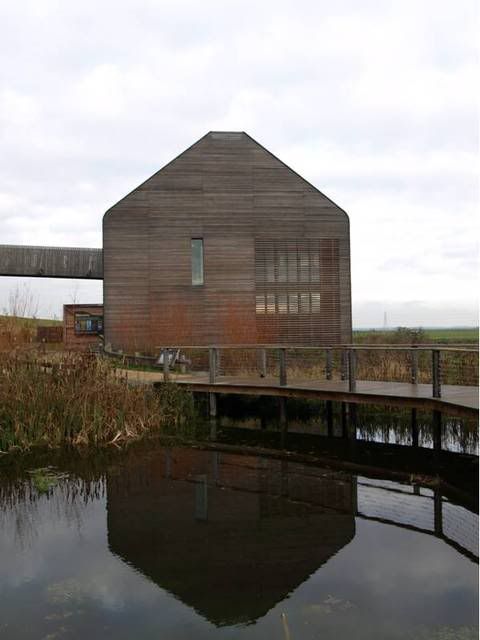
The Visitor Centre is new since the last time we were there – it’s very eco-friendly, with a reed-bed water-treatment system, and an excellent cafĂ©.


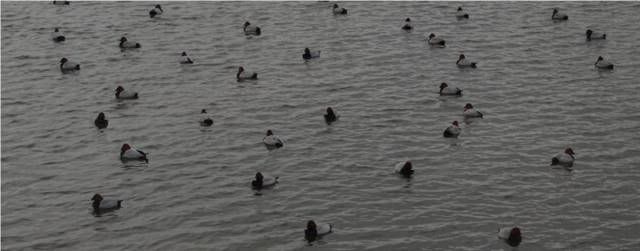
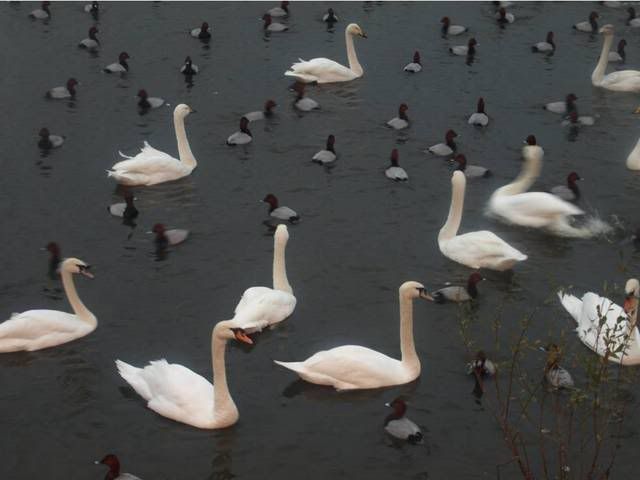
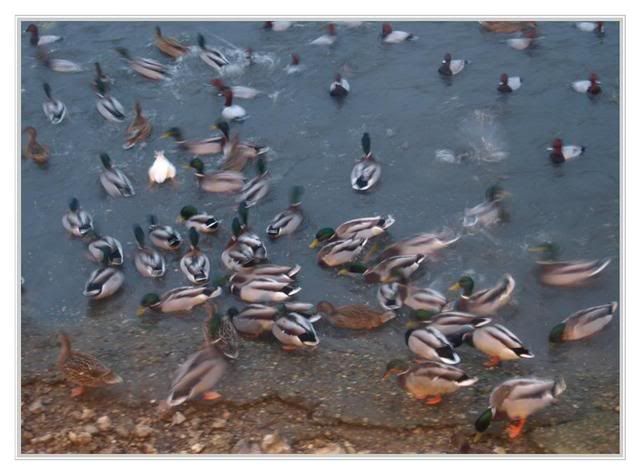
Crossing the bridge, you reach the hide – well, I call it a hide, but it’s centrally heated and far more comfortable than any hide has a right to be. It looks out across the flooded Washes – watermeadows that take the brunt of the winter’s rainfall, and managed to provide an ideal habitat for the migrating wildfowl and for summer visitors in their turn. There are three types of swan here – mute swans, whoopers, and the smaller Bewick swans, although the latter don’t come in close, being kept off the grain feed by the other, bigger birds. (At the moment there is also a black swan, an escape from a local collection and rather unexpected!) As well as swans, there are any numbers of ducks. Most of the ones close-in are mallard (the usual village pond ducks) and pochard – these are the rather dapper grey and chestnut chaps.


Duck Fact: And they are nearly all chaps… the males leave the nesting grounds earlier than the females and young, and consequently take the northerly wintering sites, making the females go further south to Spain. (Hardship, girls!!) The males head back to the breeding grounds in Scandinavia at the start of the season, taking up territories ready for the arrival of the females who, of course, have further to come. The boys bustle around, jockeying for position to be in the right place when the warden comes with the grain barrow, prodding and pushing, diving down and popping up, often underneath an indignant swan, with a flurry of bubbles and a shuffle of feathers and a quick dash to avoid an indignant swan beak. The mallard don’t tend to dive, and have their females with them. They are more inclined to simply shove each other aside in the general melee.


As the light dims the swans start to arrive in greater numbers – up to 4,000 of them at the moment – and they start to parade back and forth in front of the hide, all competing for the right to be first at the food. Below us, the floodlights go on, and excitement builds amongst the birds. A sudden rush to the right alerts us to the warden with his barrow of grain; he makes his way along in front of us, casting scoops of grain into the water. All dignity amongst the swans is immediately lost, and the ducks become a feathered frenzy.


Twilight descends, and with it more swans, white shapes in the gloaming winging over our heads with a melodious and melancholy whooping song, slipping down the cold evening air onto the water, greeting each other with bobbing heads and touching beaks, small family groups – parents and this year’s ashy grey young – staying together amidst the growing flock. We stay until it is too dark to see any more, then take the road northwards, to home and bed.

Winter’s here.

Tuesday, 7 August 2007

Blackbird Hiatus.

Guess you may have been wondering where I’ve been.

My life has been subject to blackbirds. Comings and goings have all been closely monitored, and commented upon, usually loudly. To venture out through my door, for a while, became almost a crime, punishable by pain in the eardrums.

They have been nesting in the honeysuckle by the front door. I didn’t realise to start with until, looking out through the window one evening, I noticed the female with a huge beakful of grass and twigs, determinedly poking about in the leaves beside the window. To put this position into perspective, the nest was built at my eye level, halfway between the door and the front window, less than a metre from the door itself. Going in and out, I found myself confronted by a beady stare: what are you doing now? How dare you?

I guessed she was laying eggs after a week. Blackbirds have nested in the garden before, but usually without success; on the window-ledge, they were ousted by the jackdaws, in the fuchsia bush they gave up when it was very windy. Now there were two birds, taking turns in brooding whatever lay in the cup of the nest. I resisted the temptation to look and see how many eggs they had – if she wasn’t sitting when I went out, she was lurking in the bushes and chuntering at me, an under-the-breath muttering of ‘well, get on with it, go to work, go away’ that was oddly compelling. In the evenings I watched them through the window, high-fiving with wingtips as they changed over brooding duty. They are not very elegant birds, and did everything with a great fuss and kerfuffle.

Then came the day I saw her coming into the nest with a huge caterpillar. I rang Mum: ‘we have babies!!’ The female did most of the work, aided occasionally by her more laid-back mate, who seemed to expend most of his energies on singing from the TV aerial, announcing his territorial claims to the other blackbirds down the road, who tend to dispute his ownership of my small garden.

Feeding continued apace, more and more caterpillars sacrificed to growing young. I wanted to blog, to tell everyone, but had the uneasy feeling that to do so would be the kiss of death, so kept quiet. One evening, there was a great scuffling in the honeysuckle, a flurry of wings and an inexpert flapping. They had fledged. As is the way with blackbirds, they immediately hid, and kept very quiet, except when the youngsters tried to fly – this was more a controlled crashing around the shrubs. The starlings in the chimney fledged at around the same time and were nowhere near so discreet; flappings and shoutings and persistent demands for food from every rooftop and telephone wire. I think the blackbirds thought the neighbourhood had gone downhill.

I see them occasionally now, speckled brown and still inexpert, lurking around the garden, skulking amongst the plant pots. (I think there were at least two young raised.) My life is my own again, without the constant criticism.

A bit later in the year, I’ll take the old nest down, and use it at work to show the children how it’s done. Maybe they’ll try again next year.

Sunday, 18 March 2007

Happy Mother’s Day

‘You have got to admit,’ I say to Mum, as we peer out into the gloom through the windscreen, ‘there are not many mothers that get to celebrate Mother’s Day like this.’
‘Hmmm.’ she sounds singularly unimpressed.

It’s 5.30 in the morning, in the dark, and there is a howling gale blowing from the north-west. Somewhere out in the dark, there are geese….. yes, it’s counting time again, and here we are, waiting for take-off!

A harsh rattle of sleet hits the back of the car, and the sky grows a bit lighter, lowering stratus clouds flying away above us, dumping their load of precipitation as they pass. At about 6.00 a.m. a few geese can be made out struggling through the murk, fighting a strong head wind that blows them straight back to the loch, where they give up and land again. The rooks and jackdaws are enjoying the wildness, tumbling and diving in the wind, but little else seems to be happy about it. Three roe deer cross the field, pausing to check out the car parked in the middle before springing easily over the fence and heading for the shelter of the Badger Wood. The wind rocks the car, and a gusting veil of snow reduces the visibility to a few hundred metres. I wipe the condensation from the windscreen and crack open the side-window a few millimetres. The howl of the gale is too loud to hear what is happening among the geese that I know are out there, but cannot see. I put the window back up. We spread a blanket across our knees to try and stay warm, burrowing into our fleece jackets and pulling woolly hats low on our heads. In a gap between snow-showers, a few more geese try to make their escape, wheeling around overhead only to be blown back again. One or two groups of very determined birds actually manage to make it, heading out to forage.

The snow has built up on the window on Mum’s side of the car, blocking her view. We slide down the window to clear it, and a small drift falls in, onto her lap. A car pulls up behind us.
‘This is ridiculous!’ Vicky sticks her head in through the rear door ‘we’re abandoning it for today. Breakfast back at the farmhouse!’
We are not sorry to retreat.

Later, after bacon butties, we go over to the visitor centre to see if we can see anything. The field to the left of the centre is full of geese, packed in tight, heads tucked down into feathers or feeding in a desultory manner on the grass. Fortunately, the winter has been so mild (until today!) that it hasn’t stopped growing, and they can find a decent meal. The few ducks visible are tucked well in under the banks and in the reeds. There’s no sign of the visiting sea eagle; it’s either sensibly tucked down somewhere out of the storm, or – if it’s tried to fly – is probably halfway to Norway by now.

Before we finally go home, we call in at Kinnaird Head to watch the gannets wheeling and diving offshore. The sea is a mass of white-marbled slate green, foam whipping off every ripple and crest, breaking over the rocks, spume flying through the air. A couple of scoter duck, black against the whiteness, battle their way rounds the point. An eider rides the surge, white on grey. As we drive round the harbour, a large bull grey seal bobs up in the sheltered water, safe in his refuge. We take the hint, and go home.

Wednesday, 24 January 2007

Count the legs and divide by two.

Seven-thirty on a cold Sunday morning and there’s no sign of the sun.
The sky is starting to shade to deep blue, the fields around the car are a featureless mass, and there is a distinct aroma from the large pile of manure to the right. A chill breeze blows through the window, and my companion rubs his hands briskly, and peers through his binoculars into the gloom.
‘I think I can hear them.’
I stick my head out of the window. It’s hard to tell where the sound is coming from - definitely from in front of us, but there are elements that may be behind and overhead.
‘I think you’re right - they’re on the move.’
We stare hard into the darkness.
A flicker of movement? Yes - a darker mass moving against the sky, only visible in the reflected light from the sea.
‘Damn! Something’s put them up!’ I clamp my binoculars to my eyes and grab my click-counter. From the hollow to the right they come, a great streaming, clamorous flock, dark shapes stringing out, shifting, coming together and then moving apart, shouting reveille to the brightening sky.

Pink-footed geese, heading out from their overnight roost to feed.

So why am I sat in the cold next to the dung-heap?

It’s the monthly Wetland Bird Census. All over the country, hardy souls are out looking at lakes and lochs, estuaries and mudflats, counting geese, ducks and waders as part of a long-term survey designed to see what’s around, where it is, how many are there, and how the numbers are changing. Our ‘patch’ is the local nature reserve, and today there are five of us looking it over; one at the north end checking the beach, the estuary, and the grazing fields, one south, counting birds on the main body of the loch, one at the top end of the loch, checking amongst the reedbeds, and two of us on the western side, where the majority of the geese head out from the low wetlands into the surrounding countryside. It’s an unglamorous location, in the entrance to a stubble field on a low rise of ground, beside the aforementioned manure pile (awaiting the attentions of the muck-spreader). At least this time it’s to one side - last year the farmer piled it straight in front of where I usually park the car, completely blocking the view! I have counted geese from this place for years; sometimes from the car, occasionally from the reserve truck, and on one memorable occasion stood in a snowstorm in the lee of a large fencepost.

Today the geese are leaving practically in the dark, which makes the counting a little more awkward than usual. I swear they look for new ways to confuse me; flying low along the hollows in the land to suddenly pop up, or all taking off at once in a mass resembling an explosion in a bedding factory (we call this ‘feather-bedding’), or sitting tight and stretching the count (and my bladder-control) out for hours and hours!

I peer into the patch of sky between the manure heap and the rookery wood, where the flocks are just visible, black shapes heading westward. As they pass in front of my binoculars, I count them. At the other side of the car, I can hear Angus doing the same, the steady click of his counter as he tallies the flocks leaving to the northwest. There is little in the way of a break today, the geese seem determined to get to their feeding areas as soon as possible and as the light grows, we can make out more and more of them rising from the low ground in flocks of anything up to six hundred birds. We get some warning of large take-offs - the constant background noise builds to a cacophony of calls as they wheel into the air. Occasionally there are groups of whooper swans, huge and elegant, white wings beating steadily, small family parties with their greyish youngsters, or wheeling flocks of lapwings and golden plover in their thousands.

So how do we count them? It’s a question I’m often asked, and I’m often tempted to give the reply shown above… Actually, if they are in small groups, they can be counted individually. Skeins can be counted in groups of five, hitting the clicker every time you get to twenty. For bigger flocks, where the individual geese can generally be made out, count in groups of twenty (see how big a group is and then ‘size up’) - and as the flock gets bigger and more densely packed, work in fifties or hundreds. Or use combinations of these methods. You get better with practice! It’s not utterly accurate, but accurate enough for the census, and with the same people doing the count each time there is a type of standardisation. What they don’t tend to factor into the equations is the co-efficient of frozen fingers, steamed-up binoculars and windows, or random clicks of the counter caused by shivering!

It’s a dull, grey morning, with the sun hidden behind a dense layer of cloud. Inland there is snow, although it’s clear at the reserve with occasional sleet. A fox, thick winter coat fluffed up against the cold, trots across a distant field with the remains of a goose carcass; it’s nearly the end of the shooting season, so he’ll have to work harder for his breakfast next month. A buzzard calls from somewhere above us, a high mewing cry, and in the field beside us a large group of partridges fusses about amongst the remains of the crop, small bustling brown bodies popping up amongst the dry grasses and taking to the air in an explosion of wings.

The stream of geese slowly winds down, the last few family groups taking to the air, and we head back to the visitor centre to thaw out and count the ducks and waders on the ponds there. Afterwards, we tally up the numbers over bacon sandwiches in the kitchen. Around 20,000 geese in all - about twice the norm for this time of year, probably driven in by the bad weather further south.

Not a bad morning’s work, and next month, we'll do it all again.
Saturday, 15 July 2006

Humber Mud

To the south and east, there is water.
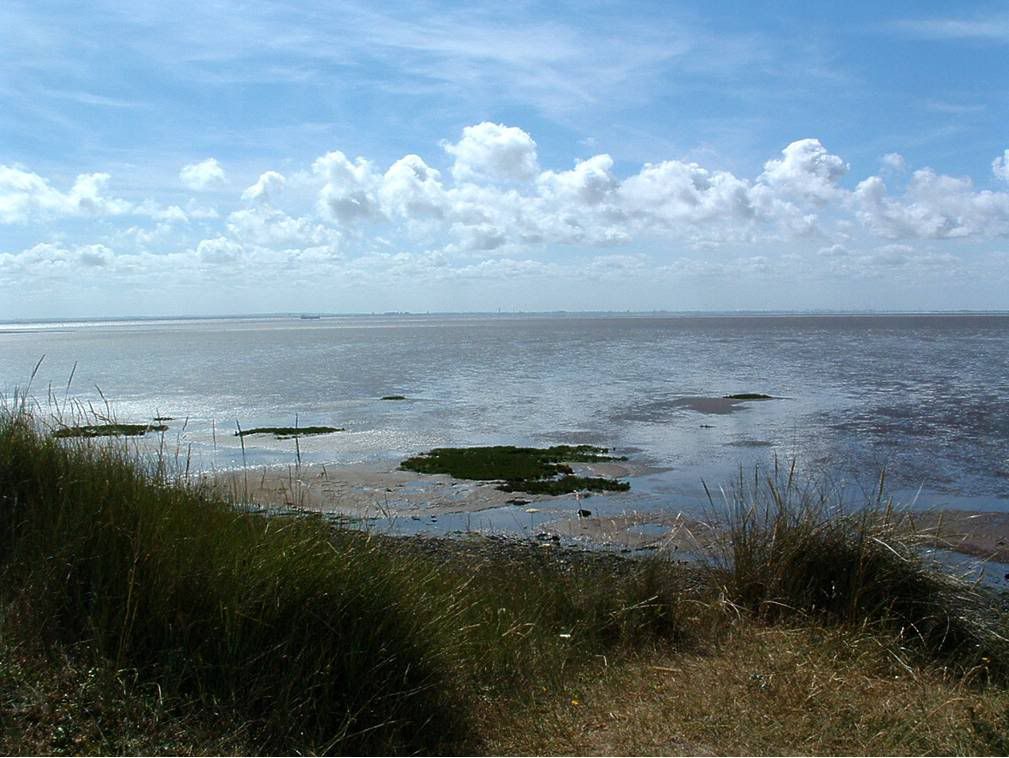
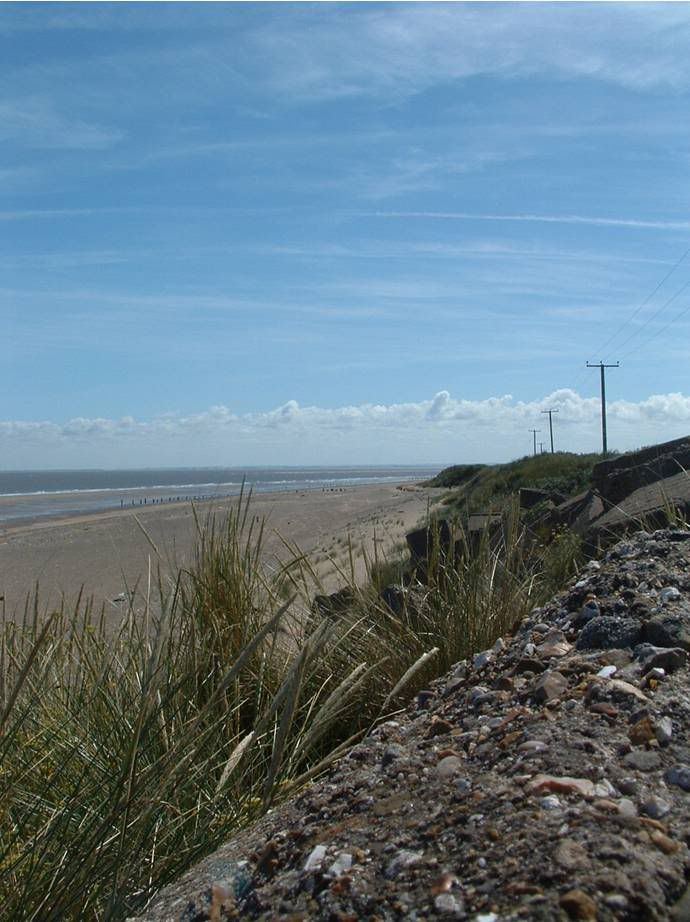
South is the Humber Estuary, a slow brown ooze; East, the cold grey blue of the North Sea. Where these meet, a long crooked finger of almost-land juts out into the tide, an ever-changing desolation of sand and shingle and mud. Each winter brings a realignment, a chance to breaking away from the mainland, and is followed by the need to rebuild the road that straggles to the end of this impudent finger.

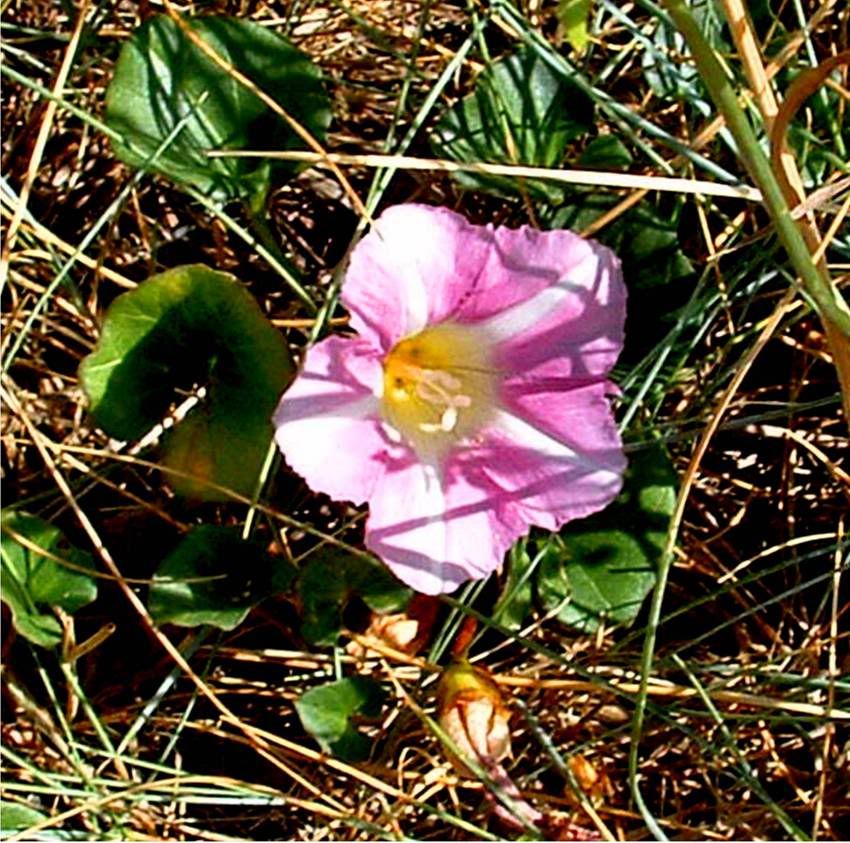
The road itself is a patchwork of concrete slabs, some inlaid with old railway lines, and odd strips of interlocking blocks which can be dug up and re-laid, at least where there is sufficient land to put them. A single track, with occasional passing places and lay-bys, it connects the isolated lifeboat station and coastguard to the rest of the world. To leave the road surface is to risk grounding, and becoming stuck in deep, soft sand. High banks, covered in bramble, leathery grey-green sea buckthorn and spiny marram grass both protect the roadway and threaten to engulf it. Convolvulus twines through the scrub, turning striped trumpet flowers towards today’s blue sky. It’s not always so welcoming. There are gaps, views of the estuary. Wide mudflats shimmer with mirages in the heat, dotted with distant birds wavering in the haze. Oystercatchers probe the mud deeply with carrot-coloured beaks, triumphantly hauling out ragworms, a lone grey plover potters about mournfully, poking a shorter beak into the semi-liquid ooze for small crustaceans and shellfish. No wonder it looks miserable.
Curlews, longest beaks of all, stalk the outer flats, searching the deepest mud. A distant line of black dots out on the water resolves itself through the binoculars into a flock of scoter, black seaducks gathered together to moult their spring feathers. Surprised by a seal, they take to the air in a flurry of dark wings, only to land with a barely controlled splash a few hundred metres away.
On the seaward side lies the beach, lined with scattered concrete blocks – tank barriers – like children’s toys left out and weathered in a forgotten corner.
A slick of muddy water spreads from the river mouth beyond sight of land. Container ships wait out beyond the channel for the tide to turn, bound for Hull and Grimsby, or up river to Goole. To reach there, they will pass under the span of the Humber Bridge, 25 years old today and only just visible on the horizon.
At the end of the land lies the small community of Spurn – houses, for the lifeboat men permanently stationed here; the road is too risky to rely on its being passable during a storm when they might be needed. The old lighthouse and landward tower now are home only to pigeons.

Wending our way back along the track, we come across a patch of sea holly, crisp silver grey-green, flowers tinged with electric blue. A survivor, like Spurn itself.

High Moor

Yorkshire is a big place. Not quite as vast as Texas, I grant you, but big enough to be diverse. My teenage years were spent exploring various parts of it, bird-watching along the muddy Humber estuary, hiking over the high expanses of the Moors; the rolling chalk of the Wolds and the boulder clay of Holderness are always a part of my childhood. Over the last couple of days, we’ve revisited some of these places.

North and west of Mum’s place lie the Wolds – a long ridge of chalk running from the bird-covered cliffs at Flamborough Head to the Humber Bridge, and stretching on south through Lincolnshire. To get almost anywhere outside East Yorkshire, you have to cross these uplands, once medieval sheep pasture and now covered with arable fields, barley and oats parched and ready for harvest under a bleach-blue sky. I wonder vaguely why there are no ancient chalk figures here, as there are on the Downs; perhaps the tribes that inhabited this area held to different gods, perhaps there were fewer regiments to carve out military memorials as they have around Salisbury, perhaps the land proved too fertile to use in this way. I don’t know. The chalk lies very close to the surface; some fields, overploughed, are nothing but pale rubble wastelands. This used to be an open expanse of prairie fields, a result of ‘big is best ‘ in farming, but more enlightened farmers have restored the hedgerows and shelter belts, there are trees again. Roadsides are billows of blue meadow cranesbill and violet scabious; candy-striped convolvulus makes intricate mosaic patches on close cut turf. Vast purple-blue fields of borage, a new crop for the new millennium, punctuate the pale gold of the cereals.

Coming down into the flatlands of the Vale of Pickering, (an old lake bed) we can see the moors rising to the north. A haze of purple-brown, lush green in the folds and gullies, they lack the homeliness of the chalk. From a gold-grey stone that makes for picturesque villages full of coaches and tourists, the land changes; harsh grey drystane dykes trace possession across the hillside, marking inbye from outbye, home farm from common land. Winding narrow roads lead up to the tops, through dales rich with greenery, flourishing oak and ash by the sides of the stony, brown-water becks; bracken, an unwelcome green invader, spreads from mooredge to roadside, and provides concealment for the sudden sheep that materialise in our path. We search for ring ousels amongst the tumbled stone walls, but find nothing but straggly rows of young rooks, dotted along the fence lines, waiting for food, and numerous woodpigeons. Pigeons have an odd, and annoying, ability to look interesting – disguising themselves briefly as falcons, cuckoos, anything – before revealing themselves with a mocking clap of their wings.

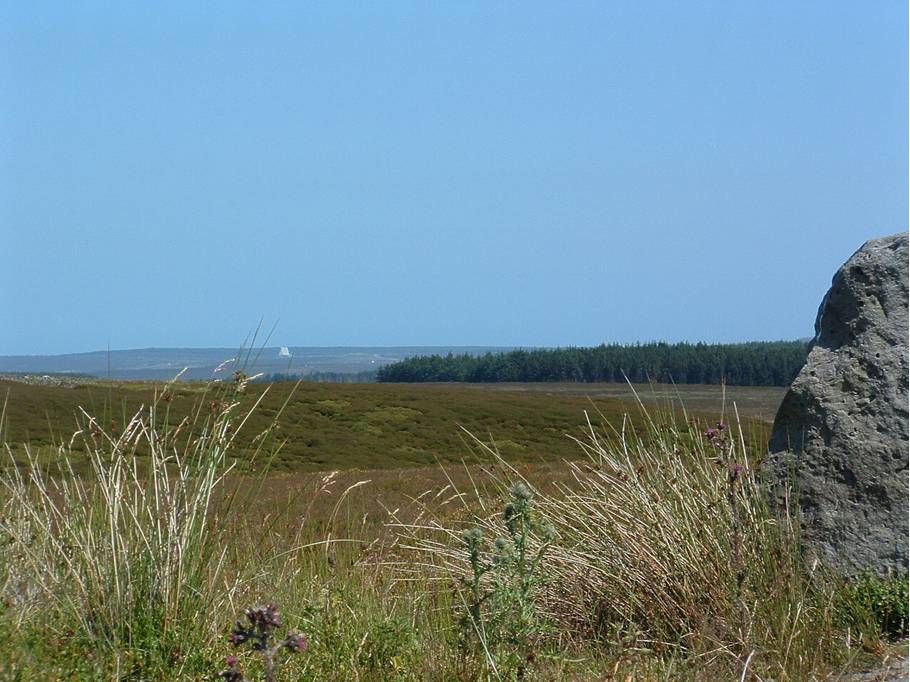
The high tops are wide open spaces, ablaze with magenta bell heather, patterned with the dark scars of muirburn. The lurking hummocks of heather-clad shooting butts mirror the rounded forms of the tumuli on the ridges, ancient burial mounds linked by the network of old tracks over the moors. Standing stones and old carved crosses mark the crossing of these ways, tracks used still by long-distance walkers. My feet remember long days and nights, hiking these dusty, peaty, muddy, stony trails.

We turn for home. Far away towards the sea, the distant carious tooth of the Fylingdales early warning radar rises above the heather, its truncated pyramid a degree more sinister than its three round forerunners. On Egton High Moor, we stop the car and listen. A contented buzzing of bees, the ever-disgruntled bleating of sheep, the haunting whistle of curlew building to a wild crescendo – does someone have to come out every morning and wind them up? (Sorry, dear, can’t stop, have to go and reset the curlews…)

You can go back.